Queridos hijos,
Al revisar fotografías y documentos antiguos se hallan tesoros insospechados, afloran historias olvidadas e incluso se vislumbra lo que movía los corazones de aquellos que hace un siglo eran tan jóvenes como lo sois vosotros ahora.
Abriendo viejas cajas polvorientas aparece por ejemplo el discurso que encontraréis más abajo y que redactó vuestra tía bisabuela Berta (la hermana de la bisabuela Casilda que fue para vuestra abuela Águeda como una segunda madre). Ese texto lo leyó Berta ante sus convecinos el 23 de enero de 1930 cuando, con 19 años y habiendo sido elegida Madrina del Somatén (un cuerpo armado formado por civiles del lugar), entregó al mismo el banderín insignia en una ceremonia que fue sencilla porque los tiempos eran austeros pero también seria y solemne.
Dejadme que, antes de mostraros el discurso y las fotografías del acto, os explique someramente la situación de la España de la época.
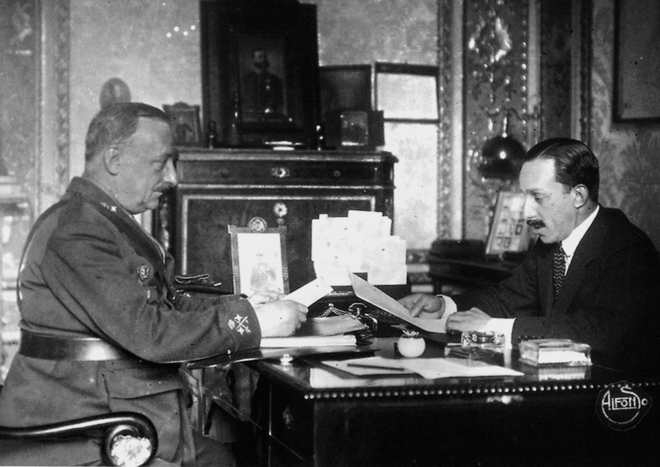
Nos encontramos en los últimos días de la dictadura de don Miguel Primo de Rivera, régimen que empezó en septiembre de 1923 con una sublevación militar incruenta y terminó el 28 enero 1930 (es decir, apenas 5 días después de la ceremonia que nos ocupa). La Dictadura (o dictablanda según otros) había puesto fin a la llamada Restauración, que había durado casi 40 años (desde 1874 hasta 1923) y que había estado marcada por la corrupción, el fraude electoral y la inestabilidad política (durante los últimos 20 años hubo 29 gobiernos).
El 13 de septiembre de 1923 don Miguel Primo de Rivera, que era capitán general de Cataluña, anunció su sublevación desde Barcelona con un manifiesto que, con pocos cambios, podría servirnos para hoy mismo. Este es un fragmento:
«Españoles: ha llegado para nosotros el momento más temido que esperado (porque hubiéramos querido vivir siempre en la legalidad y que ella rigiera sin interrupción la vida española) de recoger las ansias, de atender el clamoroso requerimiento de cuantos, amando la Patria, no ven para ella otra salvación que libertarla de los profesionales de la política, de los hombres que por una u otra razón nos ofrecen el cuadro de desdichas e inmoralidades que … amenazan a España con un próximo fin trágico y deshonroso…»
Apenas dos días después, el militar recibió del Rey el encargo de formar gobierno. Don Miguel disolvió el Parlamento y suprimió las elecciones (decisión que, en mi opinión, permitió que el país pudiera ser encarrilado adecuadamente y se iniciara una época de profunda regeneración). La sublevación contó desde su inicio con el apoyo de buena parte de la población general así como de la burguesía, los regionalistas, las universidades, la casi totalidad de la intelectualidad e incluso los sindicatos socialistas..
Dejad solo que os apunte aquí, en un breve aparte, lo que tantas veces me habéis oído decir de viva voz: que eso que llaman democracia tiene una buena fama muy inmerecida y que, desde el infausto momento en que en 1812 cayó el Antiguo Régimen, sólo en dos ocasiones (las dos dictaduras que en España hemos tenido) ha funcionado nuestra pobre patria de modo eficaz y sensato.
Pero volvamos a la Historia. Fue Primo de Rivera un hombre eminentemente práctico. Reformó las estructuras del Estado, reduciendo la escandalosa corrupción y debilitando (a Dios gracias) a la clase política. Mejoraron las infraestructuras, la economía general y el nivel de vida del español común. Disminuyó la conflictividad social, que en los años previos había sido sangrienta, persiguiéndose duramente a comunistas y, sobre todo, a anarquistas. Sofocó también por fin la terrible rebelión del Rif en Marruecos que había tenido a España 18 años en guerra. Se creó el Servicio de Crédito para liberar a los pequeños agricultores de la usura, cosa que enemistó a Primo con la oligarquía. Casi desde el primer momento la nobleza y el gran capital extranjero conspiraron contra el militar cuya posición fue debilitándose especialmente a partir del año 28. Lamentablemente Primo de Rivera no supo dar una forma política estable a su régimen (había intentado crear una Asamblea Nacional pero el Rey no dio su apoyo y el intento se frustró). Hubo también algún escándalo personal que perjudicó gravemente al régimen: Primo de Rivera presionó a un juez para que excarcelara a una mujer de vida disoluta con la que el militar (viudo) parece que tenía un romance… Al negarse el juez, fue fulminantemente destituido. Las protestas fueron importantes.
En los días del discurso del que hablamos, Primo, harto ya de todo, estaba preparando su dimisión y su autoexilio en París donde, apenas mes y medio después, moriría en el modesto hotel en el que se alojaba. Murió solo ya que sus hijas habían salido a Misa. Repatriado el cuerpo, tuvo un gran funeral y recibió el homenaje sincero de las multitudes.
Don Miguel, con sus carencias, fue un hombre mayormente honrado, viviendo siempre él y su familia con gran austeridad. La historia de su hijo José Antonio (alguien a quien por cierto la tía Berta idolatraba) es también digna de contar. Queda para otra carta.
Dejadme ahora que os hable del Somatén. El Somatén tuvo sus orígenes en la Edad Media y consistía en un cuerpo de gente armada a la que, en caso de peligro, se convocaba a toque de campana o haciendo sonar cuernos. A lo largo de la historia de España esta institución fue suprimida y restablecida en diversas ocasiones. Primo de Rivera la rescató en un momento en que también surgieron uniones cívicas similares por toda Europa. El somatén español tuvo la especificidad de estar muy controlado por el Ejército.
Para pertenecer al Somatén se debía ser hombre de reconocida moralidad que ejerciera su oficio en la misma localidad de residencia, así como disponer de armas en propiedad. Los somatenistas eran considerados agentes de la autoridad cuando la misma requería sus servicios pero podían perseguir y capturar malhechores sin que nadie se lo ordenara. En caso de declaración de estado de guerra su consideración era la de fuerza armada.
Porque, hijos míos, en aquellos tiempos duros y austeros la gente sabía que debía colaborar personalmente en mantener el orden social (y el Gobierno, a diferencia de ahora, no solo no lo impedía sino que lo organizaba y alentaba). La misión general del Somatén era entonces asegurar la tranquilidad del país, hacer respetar las leyes, defender vidas y haciendas, así como las buenas costumbres. Participaban también en la extinción de incendios, en la pacificación de riñas… El Somatén rural reprimía especialmente delitos comunes mientras que el urbano estaba más dedicado a la prevención de choques sociales y, sobre todo, a impedir las huelgas. El Somatén en esta etapa duró 6 años y contribuyó a la movilización política de incluso pueblos tan diminutos como la Villavaliente natal de vuestra abuela Águeda. Este cuerpo civil tuvo así un crecimiento exponencial entre 1924 y 1926 y en su punto álgido llegó a integrar a 215.000 hombres en una España de apenas 24 millones de habitantes. Algunos encuentros fueron realmente impresionantes: 40.000 somatenistas recibieron en noviembre de 1923 a los reyes de España y a Primo de Rivera a su regreso de un viaje a Italia.
Como siempre ocurre, nada fue fácil ni perfecto; en el Sur de España el Somatén fue rechazado por los caciques rurales que veían a la milicia como un freno a su poder local. Hubo también conflictos de competencias y choques con otros cuerpos y autoridades del Estado. Un comandante Canario, por ejemplo, se quejaba de que «hacer respetar las leyes lo entienden muchos somatenistas en un sentido tan amplio que consideran dentro de esta expresión literal incluso los asuntos más baladíes». Algunos somatenistas se creían intocables por la justicia e incluso en un pueblo de Albacete una milicia de somatenistas llegó a ejercer el bandolerismo…. La naturaleza humana, ya sabéis, da para lo que da…
El Somatén sobrevivió a la dictadura de Primo de Rivera hasta que, en abril de 1931, fue suprimido por la Segunda República a los pocos días de la instauración de ésta. Posteriormente, en 1936, tras el Alzamiento que dio inicio a la Guerra Civil, el bando nacional lo restableció en los territorios que controlaba.
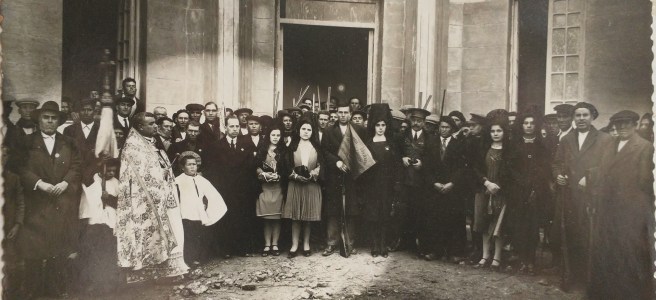
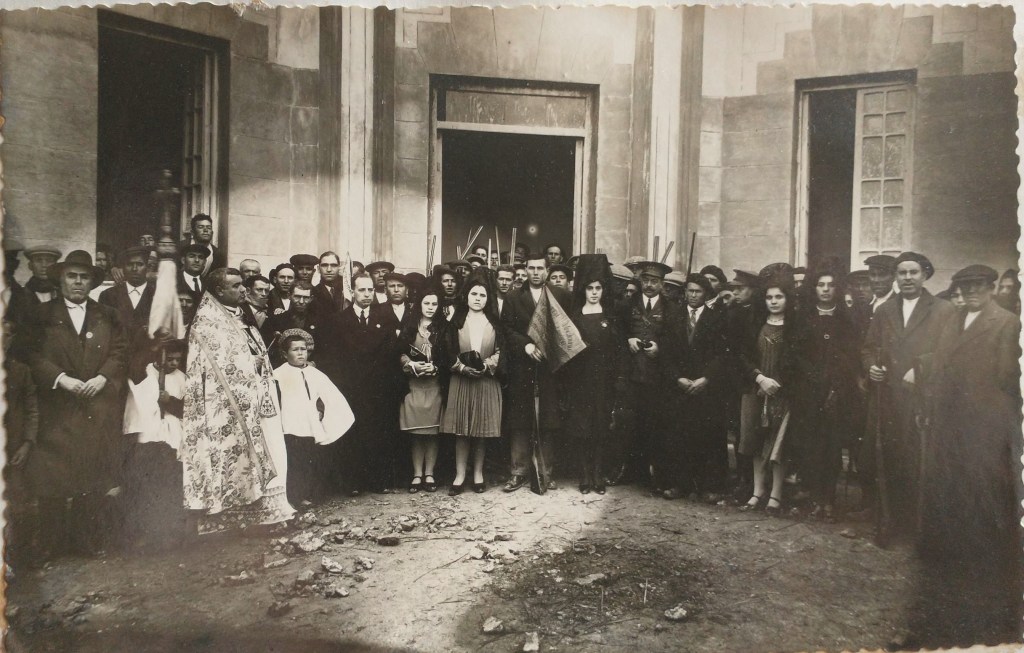
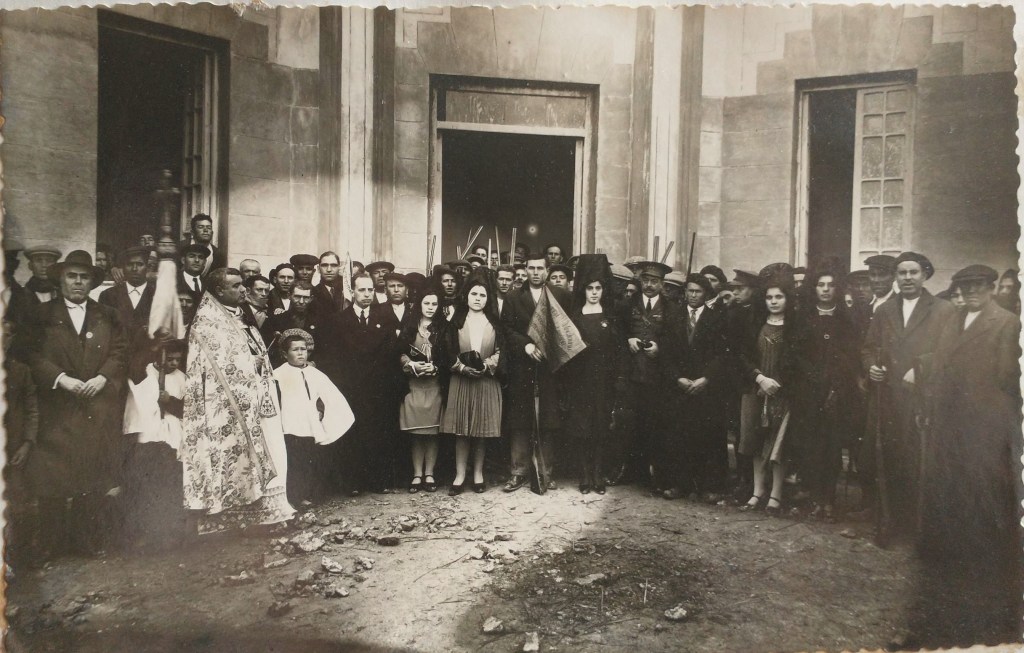
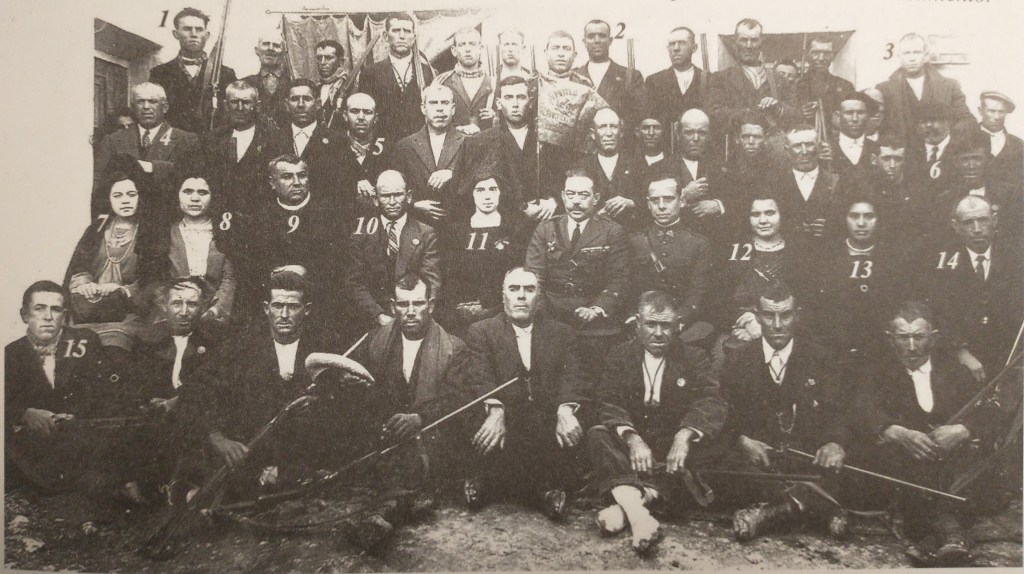
Pasemos a la ceremonia concreta que hoy rescatamos del olvido. Tuvo lugar el 23 enero de 1930, el día de San Ildefonso, patrón de Villavaliente; se hallaba el pueblo, por tanto, en plenas fiestas locales. Casi con total seguridad el Somatén de Villavaliente llevaba ya tiempo funcionando: y es que era muy habitual que la ceremonia solemne se retrasara algún tiempo ya que a ella debían concurrir diversas autoridades y era además costumbre intentar que el acto coincidiera con alguna fiesta señalada, todo lo cual contribuía a ir retrasando el momento. El día que nos ocupa se siguió un guion que, con pocos cambios, se repetía por toda España: con la asistencia de autoridades religiosas, civiles y militares, y los lugareños vestidos con sus mejores galas, se pasaba revista a los somatenes, se celebraba una misa y la bandera de España donada por la madrina recibía la bendición del sacerdote. Se proclamaban discursos encendidos y se terminaba la fiesta con un banquete popular. Todo el acto tenía un fuerte sentido patriótico y de exaltación del orden y de la fe. Los presentes sabían que estaban haciendo algo serio e importante y por ello se revestía el acto con la mayor ceremoniosidad posible.
Mirad las fotografías de ese día. Fueron hechas por don Luis Escobar (1887-1960) que fue un fotógrafo ambulante que recorrió los pueblos de Albacete, Ciudad Real y Cuenca entre los años 1920 y 1960.
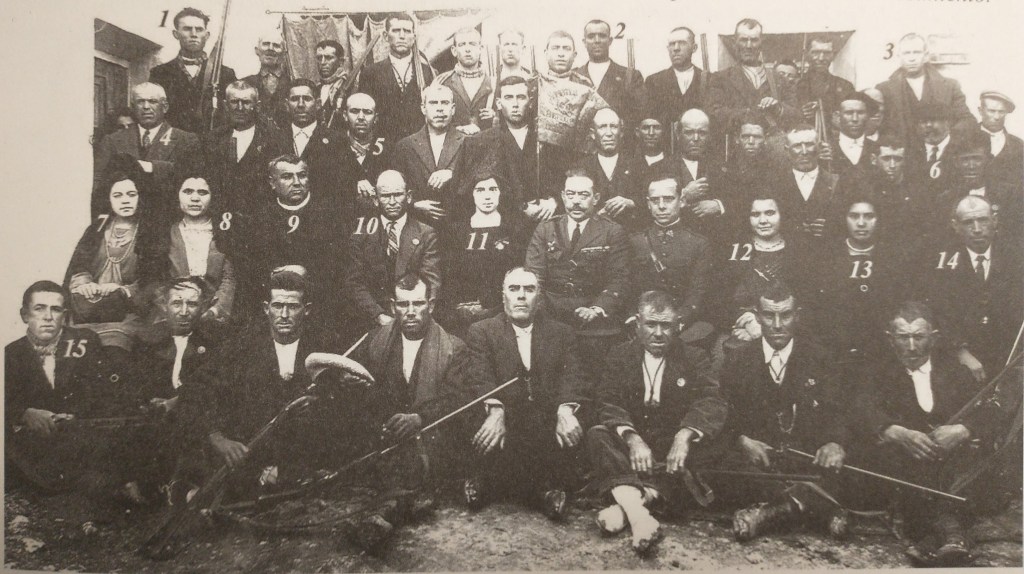
Ved aquí otros retratos de mi querida tía Berta en su juventud:
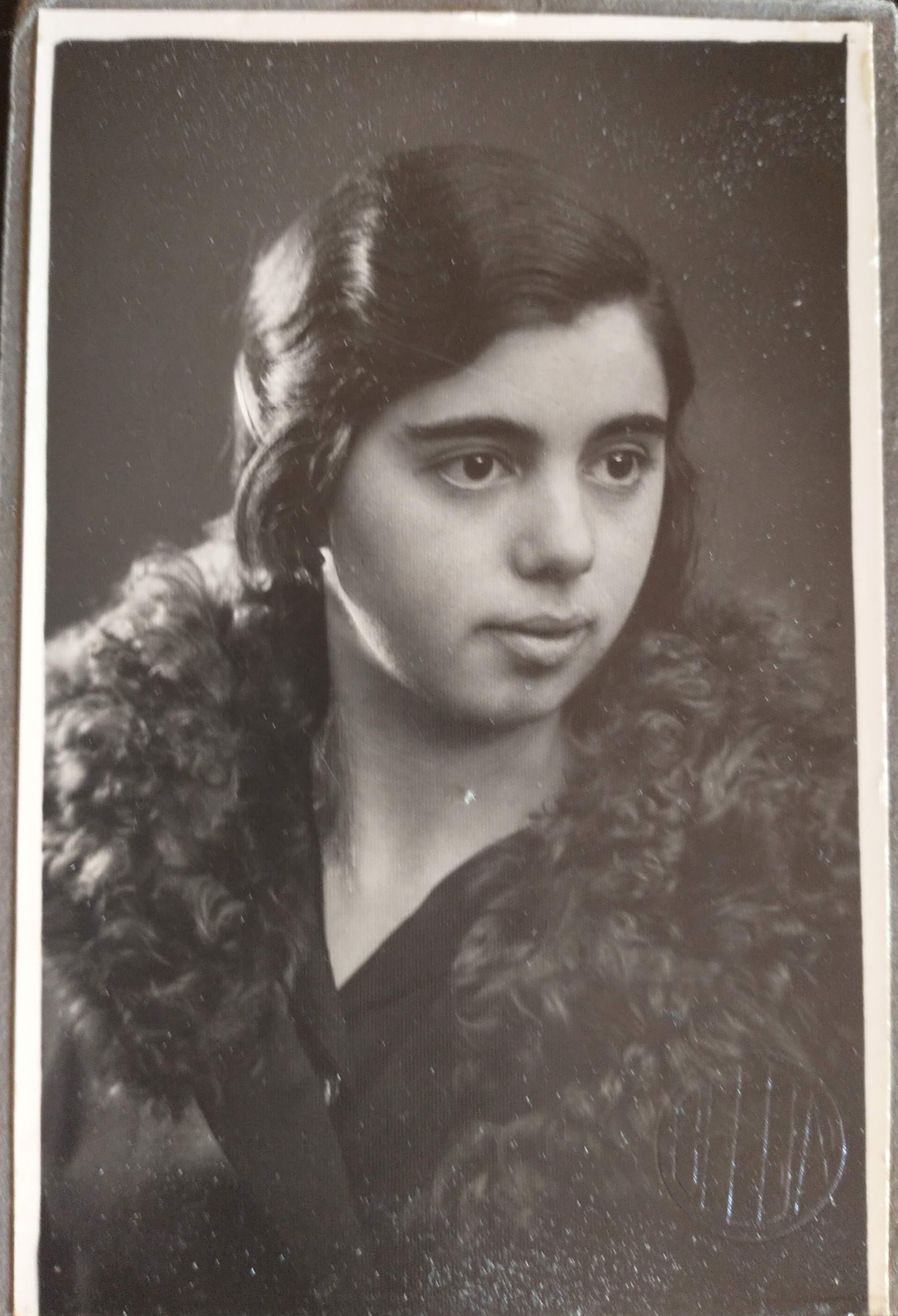
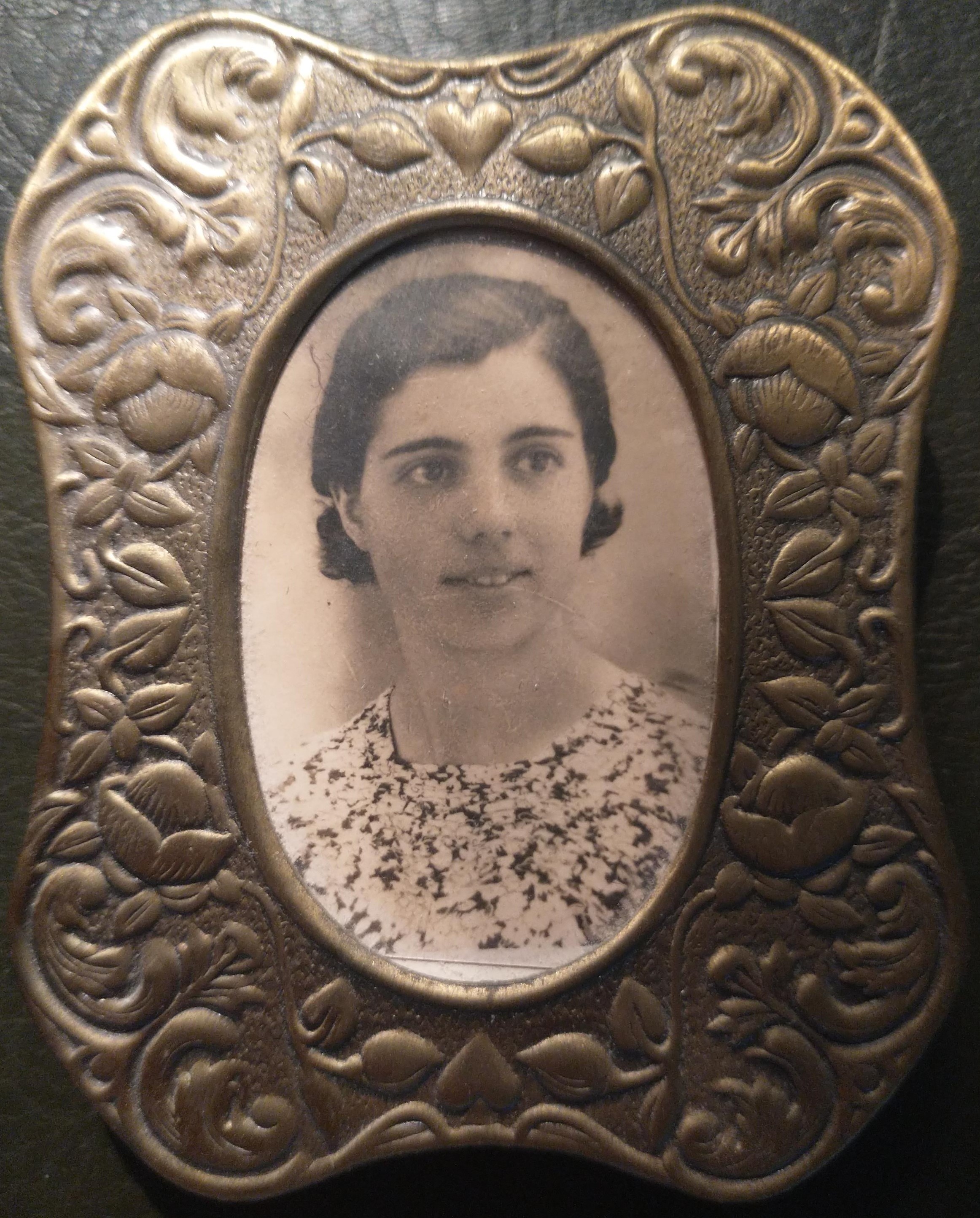
Vosotros no la conocisteis, queridos hijos, ya que murió en 1991, pero vuestra tía bisabuela Berta, la querida y dulce tía Berta, un día tuvo 19 años y, de entre todas las jóvenes de Villavaliente, fue escogida para ser la madrina del Somatén. Para ella, que era la humildad personificada, aquella elección fue un gran honor y preparó con gran seriedad y esmero un discurso que, medio siglo después, todavía podía recitar de memoria, pues aquel sencillo acto en su diminuto pueblo manchego fue para la tía Berta todo un acontecimiento. Como veréis es un discurso que dista mucho de ser retóricamente perfecto y tiene incluso errores de puntuación, pero era un texto en el que, con sinceridad genuina, expresaba una vocación de servicio abnegado que, posteriormente, a lo largo de su vida ejemplar, materializó en actos. Otro día, queridos hijos, os hablaré de su sencilla y hermosa vida. Leamos ahora su arenga:
Discurso de la madrina señorita Berta Serrano lopez
«Dignisimas autoridades,
Somatenistas, este Banderín que por mi mano se os entrega y del que me enorgullece ser la Madrina, ha de tener para todos una representación especial y sentida. Allá donde fuera ha de ser como el guión de la Patria y por tanto, por él y para ella, han de ser todos nuestros entusiasmos y todos nuestros afanes.
De ella, de la madre común, ha recibido el aliento: de Dios la bendición. De nosotros ha de recibir en este y en todos instantes nuestra ayuda material y, si preciso fuera, el holocausto de la vida en pro del orden, de la paz y de la tranquilidad de España, de la vieja madre que espera y confía en el esfuerzo de sus verdaderos hijos para seguir disfrutando de tranquila paz, sin que turbe sus sueños el sonido del cañón guerrero.
Por que así sea, yo elevo mis preces al cielo, hago votos y tengo la seguridad de que en este apacible rincón de mi Patria vibre latente el cariño por ella, como lo demuestra el hermoso acto al que todos, sin distinción, os habéis asociado con entusiasmo.
Y es que en vosotros, Somatenistas, ven la significación de esa paz duradera y constante por la que suspiran todos los habitantes de España. Atentos al orden, vigilando el derecho, prontos a coger sus armas para ser unos guerrilleros más ante el altar de la Patria. Eso es el Somatén y, por ello, yo siento una emoción y un orgullo noble e insospechado dentro de mí al verme designada como Madrina de este Banderín que no es otra cosa que la Bandera de España.
Y nada más, estimados Somatenistas, poco pueden interesaros mis palabras desprovistas de galas, aunque no de amor intensísimo hacia mi tierra bendita. Dios premiará a todos y a cada uno de vosotros el cariño que depositéis en el arca santa del amor patrio, en esta tierra vuestra, donde vuestros abuelos descansan y vuestros hijos alientan y, si volviera el día en que la paz hiciera precisa la guerra… las mujeres sabríamos como entonces, como siempre, ser para los combatientes angeles de cariño o heroínas de Zaragoza .
Mi débil voz quiere verse robustecida con la vuestra. Viva España, Viva el Rey, Viva nuestro libertador Primo de Rivera, Viva el Somatén y Viva Villavaliente.
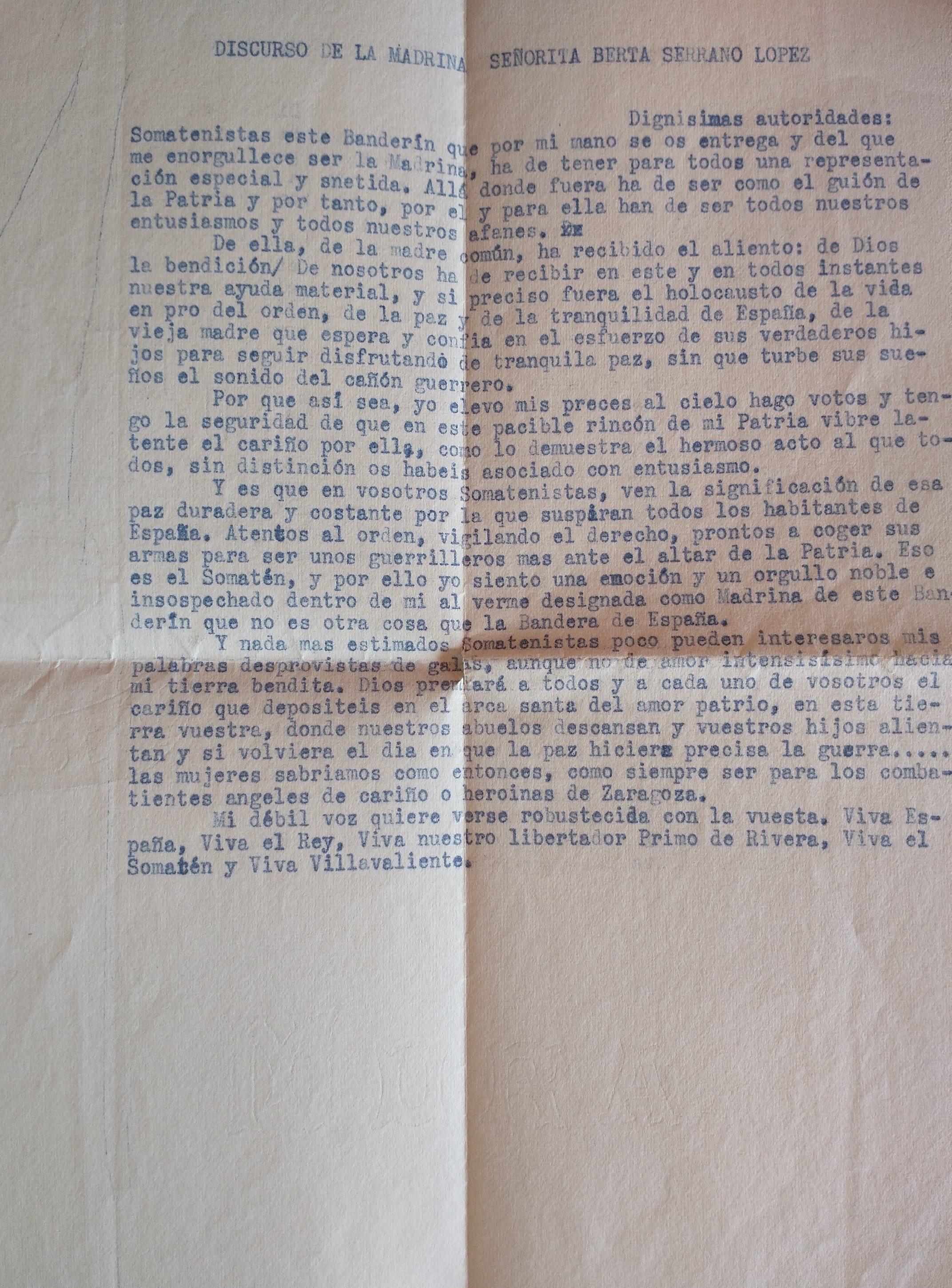
Observad hijos míos cuán naturales eran la invocación al Señor y la expresión franca del amor a la patria. También choca (en estos tiempos nuestros tan individualistas) el enaltecimiento del sacrificio personal en pro del bien mayor. Y no eran palabras proclamadas vanamente, no… En el ambiente se presentía la futura contienda y apenas 6 años después, cuando estalló la Guerra Civil y en Albacete imperó el Terror Rojo, los que asistieron a aquella ceremonia tuvieron ocasión de demostrar su fidelidad con lo que allí se ensalzó… y la mayoría pasó la prueba muy honrosamente.
Sí, vuestra tía percibía los peligros que acechaban; de ahí el espíritu belicoso que ella (la mujer más tímida, bondadosa y pacífica del mundo) transmitía. Porque la tía Berta conocía la diferencia entre la mansedumbre natural de algunas personas y ese pacifismo ideológico que es la peor elección cuando otros te han señalado ya como su enemigo.
«Largos períodos de paz promueven ciertas ilusiones. Una de ellas es creer que la inviolabilidad del hogar se basa en la Constitución. En realidad se basa en el padre de familia que se encuentra en su puerta, rodeado de sus hijos, hacha en mano.» Esto decía Ernst Junger. Y eso mismo sabían de manera instintiva los hombres y mujeres que veis en esas fotografías tomadas en aquellos tiempos revueltos. Temo que nosotros, que hemos vivido un largo período de paz y vivimos inmersos en el ensueño del progreso, tengamos muchas lecciones pendientes de aprender…
Para ir finalizando dejadme que también os indique que se atisba en el discurso de vuestra sencilla tía una comprensión suficiente de la doctrina clásica del bien común. Pero… ¿Qué es el bien común, preguntaréis? Utilizando las palabras de don José Miguel Gambra: «La doctrina clásica… caracteriza el bien común ante todo por la armonía social que nace de la colaboración de todos (cada uno desde su puesto) y de la concordia que surge de la mutua amistad», todo ello siempre encaminado a la finalidad última del hombre que no es otra que la Salvación.
Eso estuvo desde siempre marcado a fuego en los corazones de la gente del común. Se entendía que esa armonía social debía cuidarse especialmente en el ámbito de la comunidad política, aunque el bien de todos los miembros es también la finalidad de la familia, de la empresa, de la universidad, etc. Pero la patria, sí, es de especial importancia pues como dice Santo Tomás: «Después de Dios, los padres y la patria son también principios de nuestro ser y gobierno, pues de ellos y en ella hemos nacido y nos hemos criado. Por lo tanto, después de Dios, a los padres y la patria es a quien más debemos». Sí, a la tierra de nuestros padres (pues eso significa patria) le debemos la fe preservada, el orden, la cultura y muchos bienes que hemos disfrutado gracias a esfuerzos tremebundos sostenidos durante milenios por nuestros antepasados… Todos esos bienes los damos por seguros porque no queremos tener conciencia de la fragilidad de los mismos; queremos olvidar que, como decía Sir Roger Scruton, lo que ha necesitado siglos para construirse, puede ser destruido en un parpadeo.
Desde la atalaya que la edad me otorga (ya que llegué a conocer a ancianos nacidos a finales del siglo XIX y veo ahora nacer a criaturas que verán el siglo XXII) veo semejanzas y diferencias entre esas generaciones tan separadas en el tiempo, entre vosotros y la joven que fue vuestra tía bisabuela. Los jóvenes de todas las épocas tienen de manera natural, esperanza, impulso vital, deseo de bien, ganas de poner lo mejor de sí… pero temo que la juventud actual no percibe claramente los peligros que la acechan así como la necesidad de oponerse a ellos y, sobre todo, adolece de una formación filosófica sólida y sana. Y esto último es lo que más la debilita. De todo ello os iré hablando, corazones míos, en sucesivas cartas.
Para ir ya terminando y como curiosidad, junto al texto mecanografiado, encontré también un texto manuscrito muy posterior que resulta conmovedor: la tía Berta, 40 años después, siendo ya una anciana, una tarde, seguramente como entretenimiento, volvió a escribir el texto que su memoria todavía preservaba.
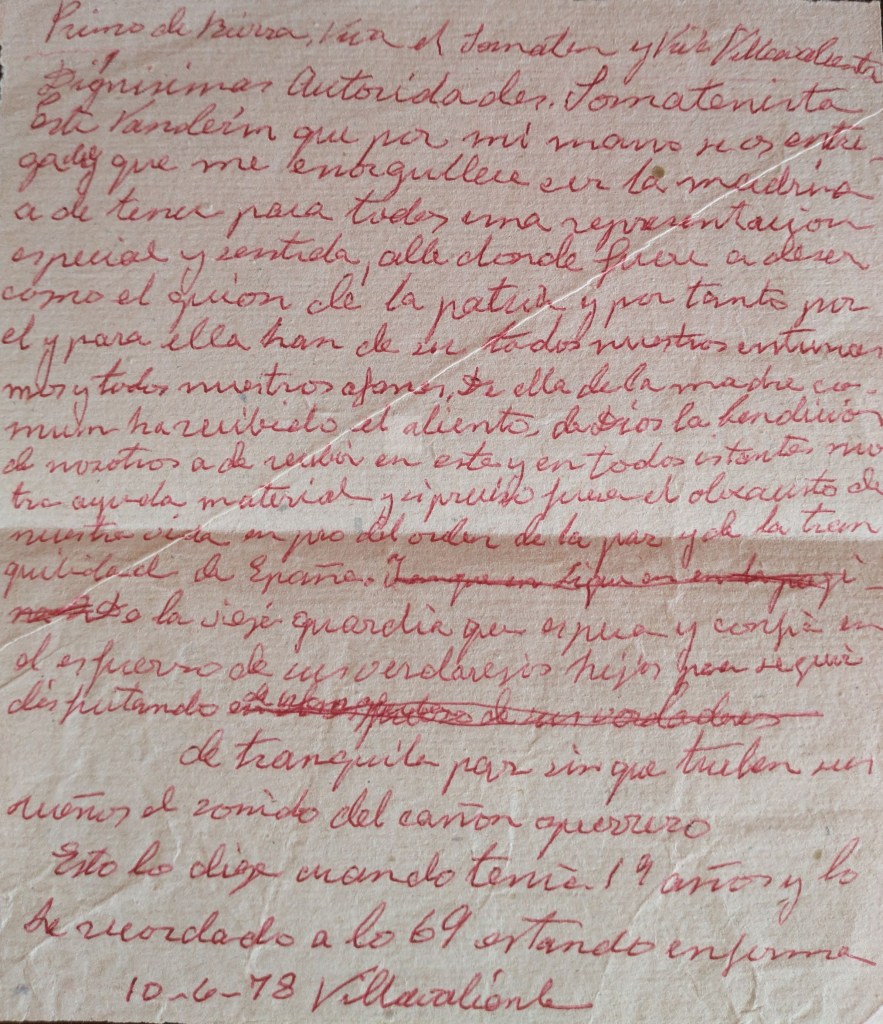
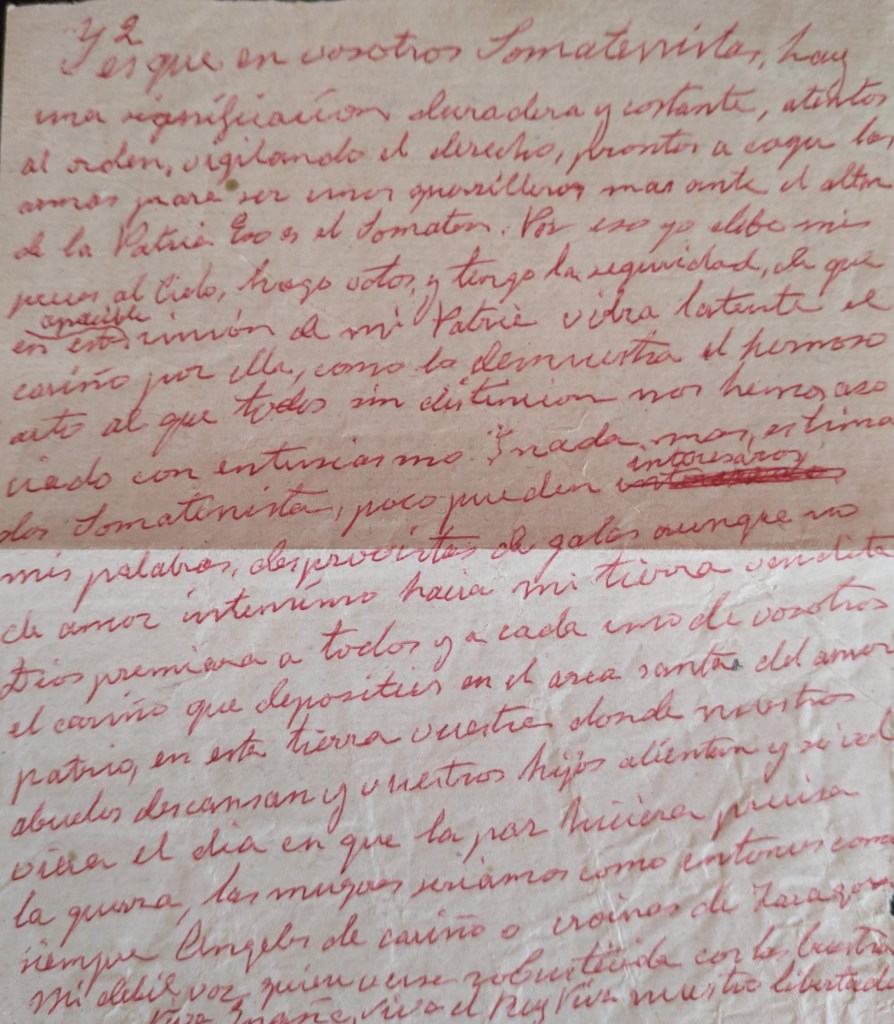
Texto escrito de memoria casi medio siglo más tarde. En la parte inferior de la primera hoja aparece esta anotación: «Esto lo dije cuando tenía 19 años y lo he recordado a los 69 estando enferma».
Hoy, casi 100 años después de aquella ceremonia, os la traigo yo a vuestro conocimiento. Dios quiera que vosotros tengáis hijos y que de aquí a 50 años (cuando yo sea un recuerdo tal y como para mí lo es ahora la tía Berta) tengáis nietos a quien narrársela y que, más allá de vosotros, estas memorias, minúsculas pero que tanto explican de una España ya casi inexistente, puedan preservarse.
Os quiere,
Vuestra madre.
………………………………………………………………………………………………………………………
Para esta carta me he servido de:
1.- El libro Familia Serrano-García escrito por un primo lejano nuestro, Juan Carlos Serrano Monedero, donde se recoge parte de la genealogía de nuestra familia.
2.- El muy recomendable libro La sociedad tradicional y sus enemigos del catedrático de Lógica de la Universidad Complutense de Madrid e insigne carlista don José Miguel Gambra.
3.- El artículo: ¿Una «milicia anémica»? El «gran Somatén español» durante la dictadura de Primo de Rivera, de Guillermo María Muñoz y Carlos Navajas, publicado en la Revista Universitaria de Historia Militar.
4.- El documental La dictadura del general Primo de Rivera, creado por el Instituto CEU de Estudios Históricos: https://www.youtube.com/watch?v=c84Tz66djFg&t=2132s
Aunt Berta’s speech at the blessing of the Somatén flag.
Reviewing old photographs and documents reveals unexpected treasures, brings to light forgotten stories, and even offers a glimpse into what moved the hearts of those who, a century ago, were as young as you are now.
Opening dusty old boxes, for example, reveals the speech you will find below, written by your great-aunt Berta (the sister of your great-grandmother Casilda, who was like a second mother to your grandmother Águeda). Berta read this text to her neighbors on January 23, 1930, when, at 19 years old and having been chosen as Godmother of the Somatén (an armed corps made up of local civilians), she presented them with their insignia in a ceremony that was simple, because times were austere, but also serious and solemn.
Before showing you the speech and the photographs of the event, let me briefly explain the situation in Spain at that time.
We find ourselves in the final days of the dictatorship of Miguel Primo de Rivera, a regime that began in September 1923 with a bloodless military uprising and ended on January 28, 1930 (that is, barely five days after the ceremony in question). The Dictatorship (or «soft dictatorship,» as some call it) had brought an end to the so-called Restoration, which had lasted almost 40 years (from 1874 to 1923) and had been marked by corruption, electoral fraud, and political instability (there were 29 governments during the last 20 years).
On September 13, 1923, Miguel Primo de Rivera, then Captain General of Catalonia, announced his uprising from Barcelona with a manifesto that, with few changes, could still be relevant today. Here is an excerpt:
«Spaniards: the moment most feared rather than anticipated has arrived for us (because we would have preferred to live always within the law and for it to govern Spanish life without interruption) to heed the yearnings, to attend to the clamorous demand of all those who, loving the Fatherland, see no other salvation for it than to free it from the professional politicians, from the men who, for one reason or another, present us with the picture of misfortunes and immoralities that… threaten Spain with a near tragic and dishonorable end…»
Just two days later, the military officer received the King’s mandate to form a government. Don Miguel dissolved Parliament and abolished the elections (a decision which, in my opinion, allowed the country to be properly set on the right path and usher in a period of profound regeneration). From its inception, the uprising enjoyed the support of a large part of the general population, as well as the bourgeoisie, regionalists, universities, almost the entire intellectual class, and even the socialist unions.
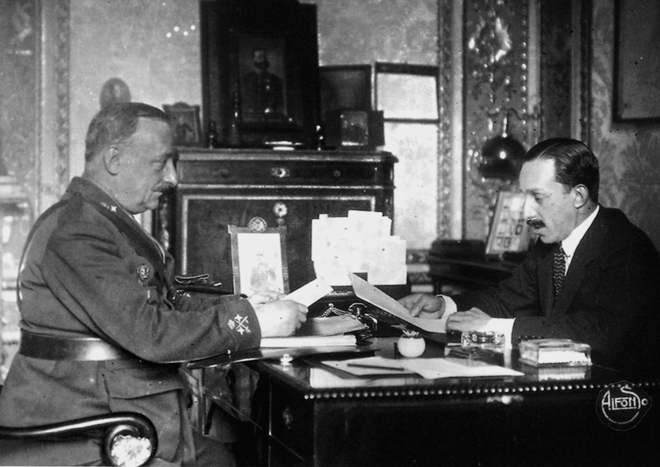
Let me just mention here, in a brief aside, what you have so often heard me say out loud: that what they call democracy has a very undeserved good reputation and that, since the unfortunate moment when the Old Regime fell in 1812, only on two occasions (the two dictatorships that we have had in Spain) has our poor country functioned effectively and sensibly.
But let’s return to history. Primo de Rivera was an eminently practical man. He reformed the structures of the State, reducing the scandalous corruption and weakening (thankfully) the political class. Infrastructure, the general economy, and the standard of living of ordinary Spaniards all improved. Social conflict, which in previous years had been bloody, diminished, with communists and, above all, anarchists being harshly persecuted. He also finally quelled the terrible Rif Rebellion in Morocco, which had kept Spain at war for 18 years. The Credit Service was created to free small farmers from usury, a move that alienated Primo from the oligarchy. Almost from the outset, the nobility and large foreign capital conspired against the military leader, whose position weakened, especially after 1928. Unfortunately, Primo de Rivera was unable to give his regime a stable political form (he had tried to create a National Assembly, but the King did not support it, and the attempt failed). There was also a personal scandal that seriously damaged the regime: Primo de Rivera pressured a judge to release a woman of loose morals with whom the widowed general apparently had an affair… When the judge refused, he was summarily dismissed. The protests were significant.
In the days leading up to the speech we mentioned, Primo, fed up with everything, was preparing his resignation and self-imposed exile in Paris where, barely a month and a half later, he would die in the modest hotel where he was staying. He died alone, as his daughters had gone to Mass. His body was repatriated, and he was given a grand funeral and received the heartfelt homage of the crowds.
Don Miguel, despite his shortcomings, was a mostly honest man, always living with great austerity, along with his family. The story of his son José Antonio (whom Aunt Berta, by the way, idolized) is also worth telling. It will have to wait for another letter.
Now let me tell you about the Somatén. The Somatén originated in the Middle Ages and consisted of an armed force that, in case of danger, was summoned by the ringing of bells or the sounding of horns. Throughout Spanish history, this institution was suppressed and reinstated on several occasions. Primo de Rivera revived it at a time when similar civic unions were emerging throughout Europe. The Spanish Somatén was unique in that it was heavily controlled by the Army.
To belong to the Somatén, one had to be a man of recognized moral character who practiced his trade in the same town where he resided, and who also owned firearms. Somatén members were considered agents of authority when their services were required, but they could pursue and capture wrongdoers without being ordered to do so. In the event of a declaration of a state of war, they were considered an armed force.
Because, my children, in those harsh and austere times, people knew they had to personally collaborate in maintaining social order (and the government, unlike today, not only did not prevent it but organized and encouraged it). The general mission of the Somatén was then to ensure the tranquility of the country, enforce the laws, defend lives and property, as well as good morals. They also participated in extinguishing fires, pacifying fights… The rural Somatén primarily repressed common crimes, while the urban Somatén was more dedicated to preventing social unrest and, above all, to preventing strikes. The Somatén, during this period, lasted six years and contributed to the political mobilization of even tiny towns like Villavaliente, your grandmother Águeda’s birthplace. This civilian corps experienced exponential growth between 1924 and 1926, reaching its peak with 215,000 men in a Spain of just 24 million inhabitants. Some encounters were truly impressive: in November 1923, 40,000 Somatén members greeted the King and Queen of Spain and Primo de Rivera upon their return from a trip to Italy.
As always, nothing was easy or perfect; in southern Spain, the Somatén was rejected by rural landowners who saw the militia as a check on their local power. There were also jurisdictional conflicts and clashes with other state bodies and authorities. A commander from the Canary Islands, for example, complained that «many Somatén members understand ‘upholding the law’ in such a broad sense that they consider even the most trivial matters to fall under this literal expression.» Some Somatén members believed themselves untouchable by the law, and in one town in Albacete, a militia of Somatén members even resorted to banditry… Human nature, as you know, is what it is…
The Somatén survived the dictatorship of Primo de Rivera until, in April 1931, it was abolished by the Second Republic just days after its establishment. Later, in 1936, after the uprising that started the Civil War, the national side reinstated it in the territories it controlled.
Let us turn to the specific ceremony that we are rescuing from oblivion today. It took place on January 23, 1930, the feast day of Saint Ildefonso, patron saint of Villavaliente; the town was, therefore, in the midst of its local festivities. Almost certainly, the Villavaliente Somatén had been operating for some time: it was quite common for the solemn ceremony to be delayed, as various authorities were expected to attend, and it was also customary to try to schedule the event to coincide with a significant holiday, all of which contributed to postponing the moment. On the day in question, a script was followed that, with few variations, was repeated throughout Spain: with the attendance of religious, civil, and military authorities, and the locals dressed in their finest attire, the Somatén troops were inspected, a mass was celebrated, and the Spanish flag, donated by the godmother, received the priest’s blessing. Fiery speeches were delivered, and the festivities concluded with a communal banquet. The entire ceremony had a strong patriotic feel and exalted order and faith. Those present knew they were doing something serious and important, and therefore the ceremony was conducted with the utmost ceremony.
Look at the photographs from that day. They were taken by Don Luis Escobar (1887-1960), who was an itinerant photographer who traveled through the towns of Albacete, Ciudad Real, and Cuenca between 1920 and 1960.
Here are some other portraits of my dear Aunt Berta in her youth:
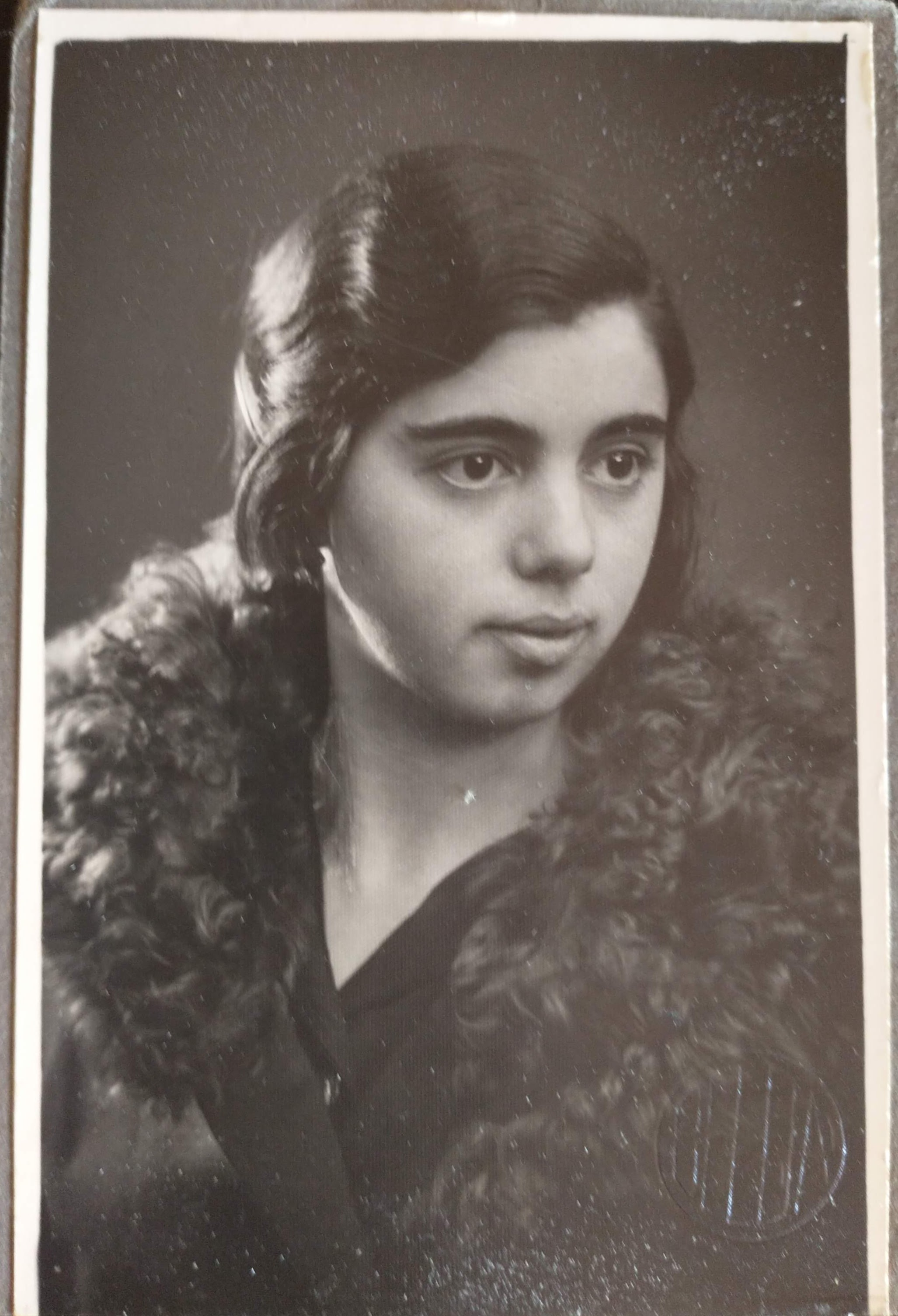
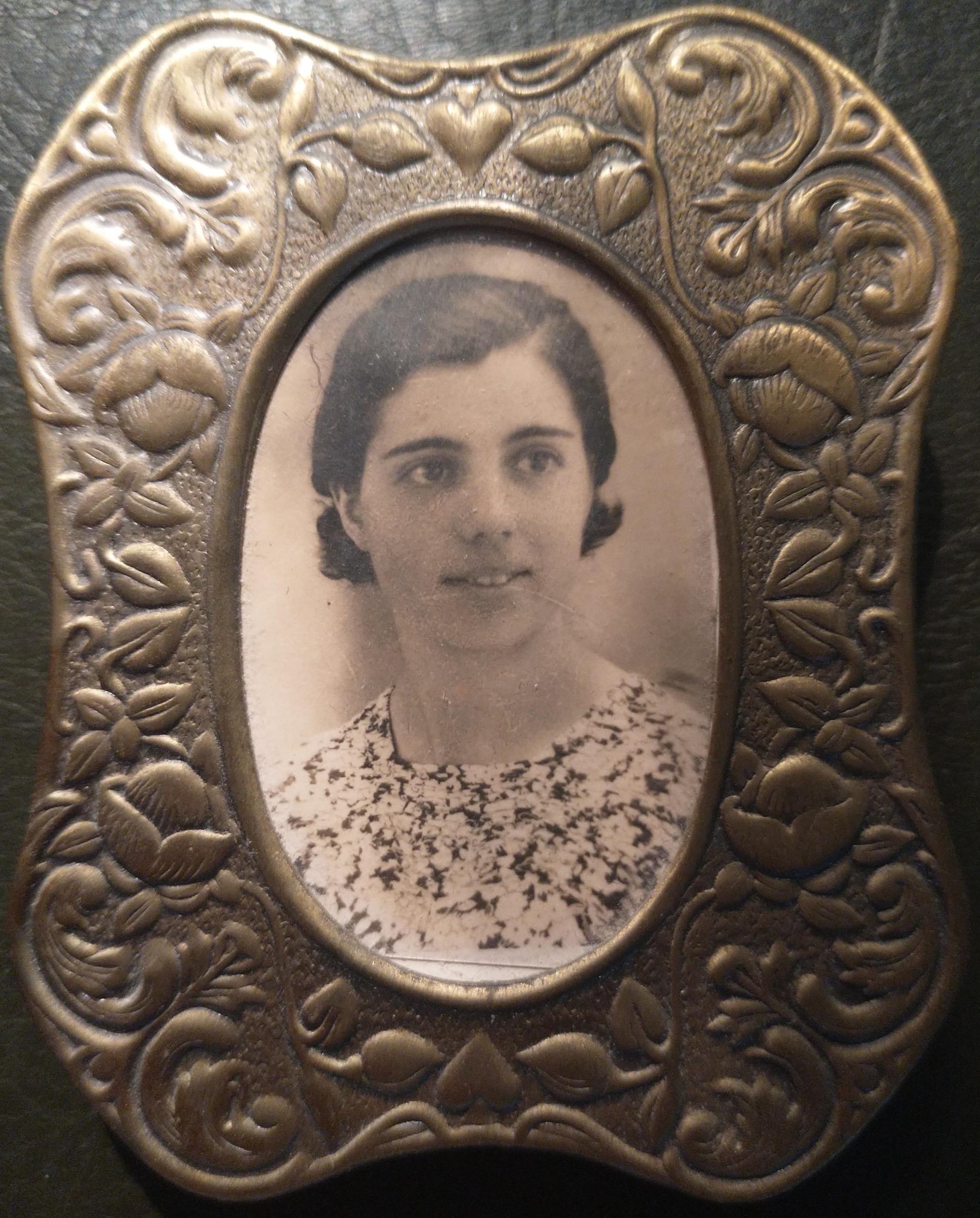
You didn’t know her, dear children, since she died in 1991, but your great-aunt Berta, our beloved and sweet Aunt Berta, was once 19 years old and, out of all the young women of Villavaliente, was chosen to be the godmother of the Somatén. For her, who was humility personified, that choice was a great honor, and she prepared with great seriousness and care a speech that, half a century later, she could still recite from memory, for that simple act in her tiny village in La Mancha was quite an event for Aunt Berta. As you will see, it is a speech that is far from rhetorically perfect and even has punctuation errors, but it was a text in which, with genuine sincerity, she expressed a vocation for selfless service that, later, throughout her exemplary life, she materialized in actions. Another day, dear children, I will tell you about her simple and beautiful life. Let us now read her address:
Speech by the godmother, Miss Berta Serrano Lopez
«Distinguished authorities,
Somatenes, this pennant, which I present to you and of which I am proud to be the godmother, must hold a special and heartfelt significance for all of you. Wherever it goes, it must be like the banner of the Fatherland, and therefore, for them both, must be all our enthusiasm and all our efforts.
From her, from our common mother, it has received its breath; from God, its blessing. From us, it must receive, at this moment and at every moment, our material support and, if necessary, the sacrifice of our lives for the sake of order, peace, and tranquility in Spain, the old mother who waits and trusts in the efforts of her true children to continue enjoying tranquil peace, without the sound of the war cannon disturbing her dreams.
So that it may be so, I raise my prayers to heaven, I make vows, and I am certain that in this peaceful corner of my Fatherland, the affection for her will vibrate latently, as it demonstrates the beautiful act to which all of you, without distinction, have enthusiastically joined.For in you, Somatenistas, they see the embodiment of that lasting and constant peace for which all the inhabitants of Spain yearn. Attentive to order, vigilant in upholding the law, ready to take up arms to become guerrillas before the altar of the Fatherland. That is the Somatén, and for this reason, I feel a noble and unexpected emotion and pride within me upon being designated as Godmother of this Pennant, which is none other than the Flag of Spain.
And that is all, esteemed Somatenistas. My words, devoid of finery, though not of intense love for my blessed land, may hold little interest for you. God will reward each and every one of you for the affection you place in the sacred ark of patriotic love, in this land of yours, where your grandparents rest and your children thrive, and, should the day return when peace necessitates war… the women We would know, as then, as always, to be for the combatants angels of affection or heroines of Zaragoza.
My weak voice longs to be strengthened by yours. Long live Spain, long live the King, long live our liberator Primo de Rivera, long live the Somatén, and long live Villavaliente.
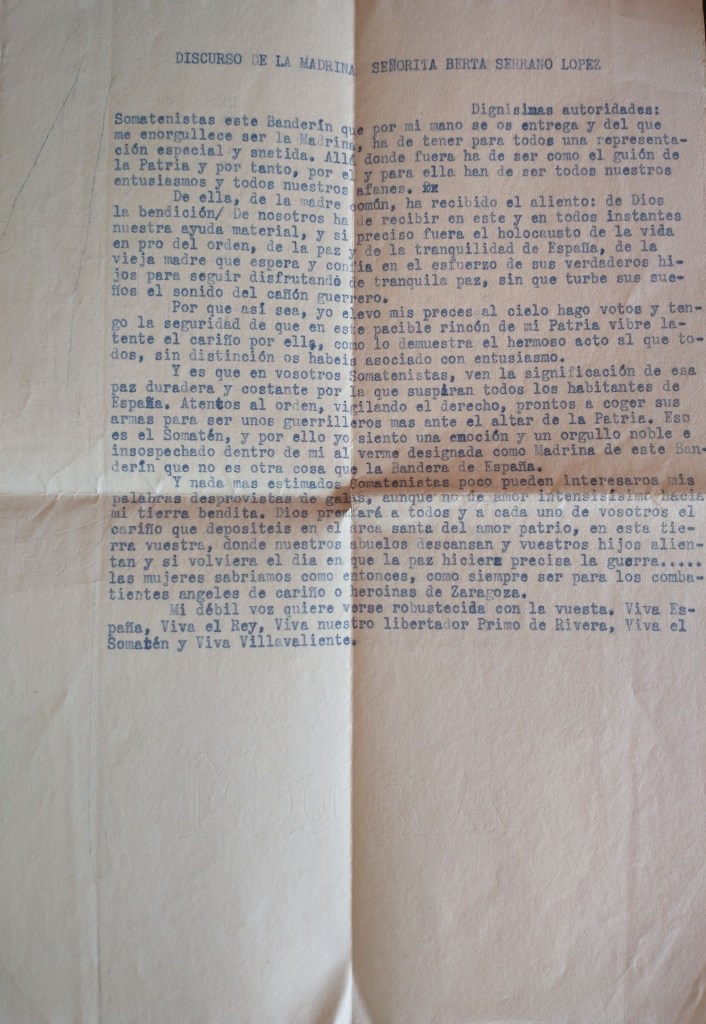
Observe, my children, how natural the invocation of the Lord and the frank expression of love for the homeland were. The exaltation of personal sacrifice for the greater good is also striking in these individualistic times of ours. And these were not words proclaimed in vain, no… The future conflict was palpable in the air, and barely six years later, when the Civil War broke out and the Red Terror reigned in Albacete, those who attended that ceremony had the opportunity to demonstrate their fidelity to what had been praised there… and most passed the test with flying colors.
Yes, your aunt perceived the dangers that lurked; hence the bellicose spirit that she (the most timid, kind, and peaceful woman in the world) conveyed. Because Aunt Berta knew the difference between the natural meekness of some people and that ideological pacifism which is the worst choice when others have already marked you as their enemy.
«Long periods of peace foster certain illusions. One of them is believing that the inviolability of the home is based on the Constitution. In reality, it is based on the father standing at his doorstep, surrounded by his children, axe in hand.» This is what Ernst Jünger said. And the men and women you see in those photographs taken during those turbulent times knew instinctively. I fear that we, who have lived through a long period of peace and are immersed in the dream of progress, have many lessons yet to be learned…
To conclude, let me also point out that your simple aunt’s discourse reveals a sufficient understanding of the classical doctrine of the common good. But… what is the common good, you might ask? Using the words of José Miguel Gambra: «The classical doctrine… characterizes the common good above all by the social harmony that arises from the collaboration of all (each from their own position) and from the concord that emerges from mutual friendship,» all of this always directed toward the ultimate end of humankind, which is none other than Salvation.
This has always been deeply ingrained in the hearts of ordinary people. It was understood that this social harmony should be especially nurtured within the sphere of the political community, although the good of all its members is also the purpose of the family, the company, the university, and so on. But the homeland, yes, is of special importance, for as Saint Thomas Aquinas says: «After God, our parents and our homeland are also the principles of our being and government, for we were born and raised by them. Therefore, after God, it is to our parents and our fatherland that we owe the most.» Yes, to the land of our fathers we owe the preserved faith, order, culture, and many blessings we have enjoyed thanks to the tremendous efforts sustained for millennia by our ancestors… We take all these blessings for granted because we do not want to be aware of their fragility; we want to forget that, as Sir Roger Scruton said, what has taken centuries to build can be destroyed in the blink of an eye.
From the vantage point that age affords me (since I knew elderly people born at the end of the 19th century and now see children being born who will live into the 22nd century), I see similarities and differences between these generations so separated in time, between you and the young woman who was your great-aunt. Young people of all eras naturally possess hope, a vital drive, a desire for good, a yearning to give their best… but I fear that today’s youth do not clearly perceive the dangers that threaten them, nor the need to oppose them, and above all, they lack a solid and sound philosophical foundation. And this last point is what weakens them most. I will speak to you about all of this, my dears, in subsequent letters.
To conclude, and as a curiosity, alongside the typed text, I also found a much later handwritten text that is quite moving: Aunt Berta, 40 years later, already an old woman, one afternoon, surely as entertainment, rewrote the text that her memory still preserved.
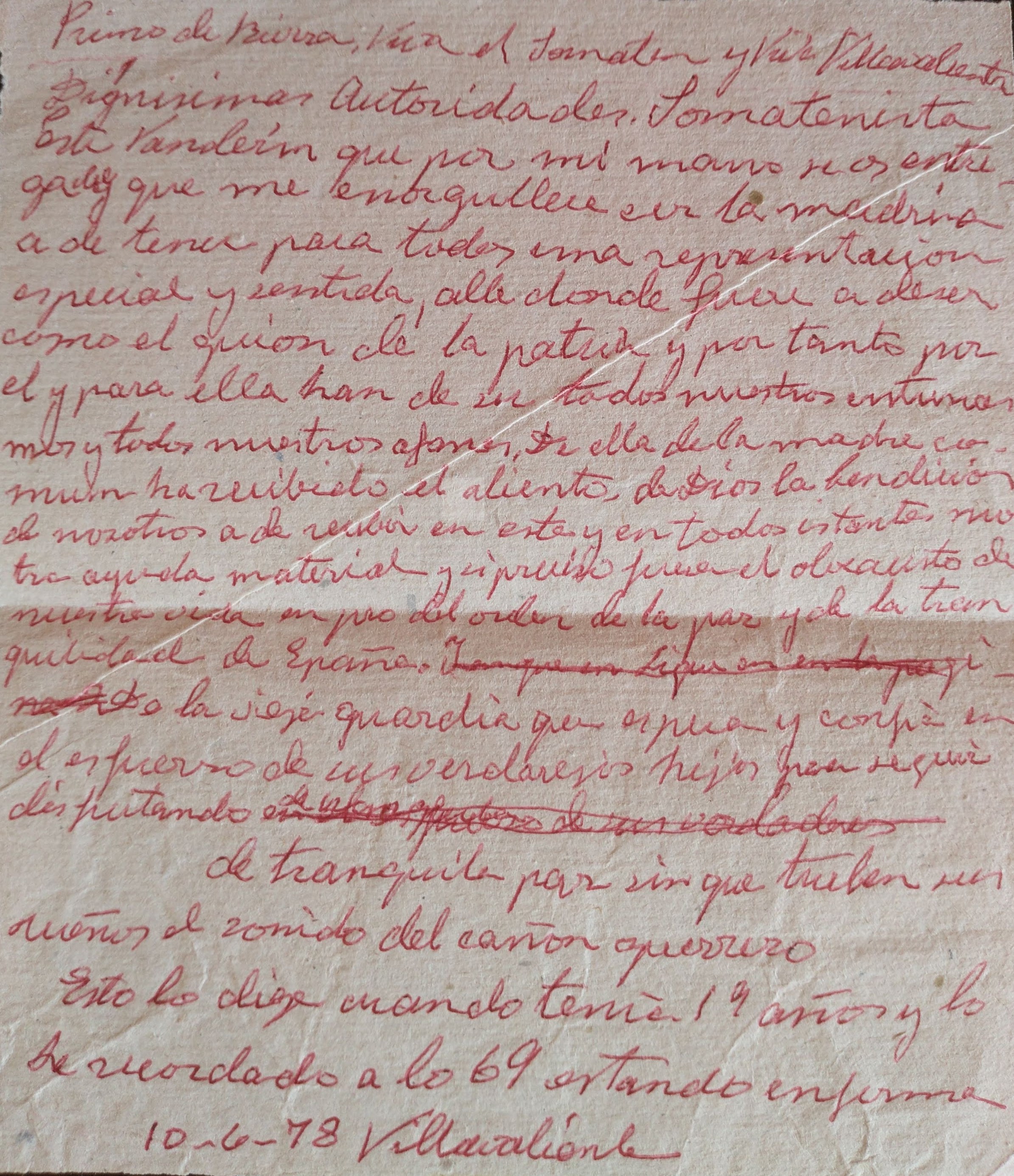
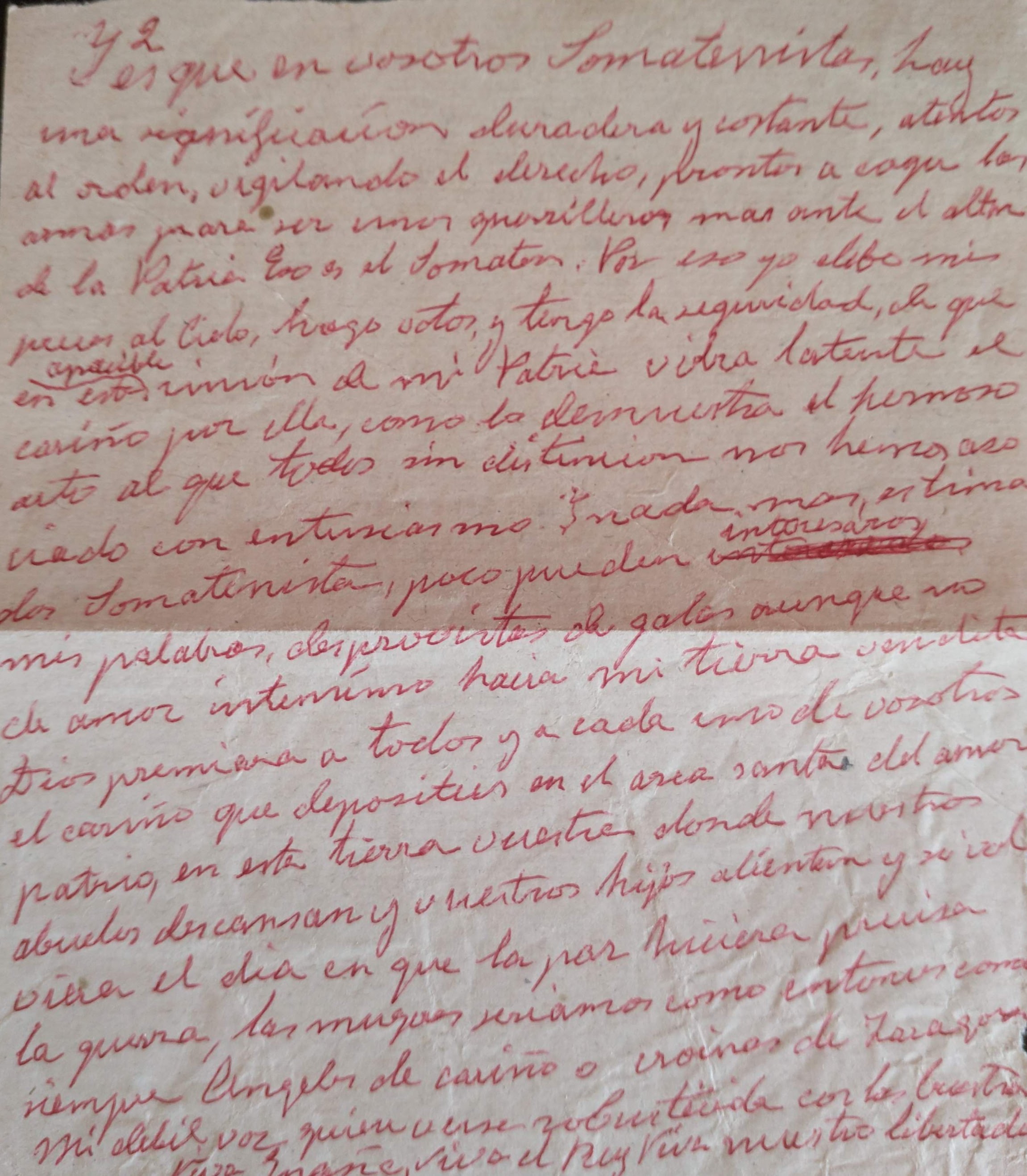
Text written from memory almost half a century later. At the bottom of the first page appears this note: «I said this when I was 19 and I remembered it at 69 while ill.»
Today, almost 100 years after that ceremony, I bring it to your attention. God willing, you will have children, and that in 50 years (when I am but a memory, as Aunt Berta is to me now) you will have grandchildren to whom you can tell this story, and that, beyond your own time, these memories, tiny yet revealing so much about a Spain that is now almost nonexistent, may be preserved.
With love,
Your mother.
………………………………………………………………………………………………………………………………………….
For this letter, I have used the following resources:
- The book Familia Serrano-García, written by a distant cousin of ours, Juan Carlos Serrano Monedero, which includes part of our family’s genealogy.
- The highly recommended book La sociedad tradicional y sus enemigos (Traditional Society and Its Enemies) by José Miguel Gambra, Professor of Logic at the Complutense University of Madrid and distinguished Carlist.
- The article «An ‘Anemic Militia’? The ‘Great Spanish Somatén’ during the Dictatorship of Primo de Rivera,» by Guillermo María Muñoz and Carlos Navajas, published in the Revista Universitaria de Historia Militar (University Journal of Military History).
- The documentary La dictadura del general Primo de Rivera (The Dictatorship of General Primo de Rivera), produced by the CEU Institute of Historical Studies. https://www.youtube.com/watch?v=c84Tz66djFg&t=2132s

 Cartas a mis hijos