Queridos hijos,
A riesgo de que me encontréis pesada dejad que os explique cómo eran las familias pueblerinas antes de que la industrialización, con sus colosales desplazamientos de masas del campo a la ciudad, desarraigara a millones de almas de los terruños que les eran propios, conocidos y queridos.
Antes del cataclismo los tiempos eran moderadamente ordenados y felices… solo moderadamente, claro, porque la naturaleza caída del hombre, el estar quebrado por el pecado original, no permite nunca perfecciones celestiales…
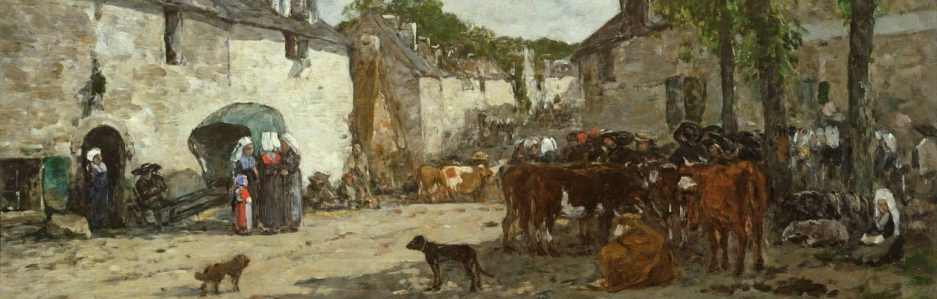
Vuestros bisabuelos y tatarabuelos vivían en aquellas enormes casas que eran habituales entonces en la Manchuela. Casonas de agricultores llenas de vida y con espacio más que sobrado para albergarla cómodamente: cocina, múltiples despensas, comedor y sala de visitas, dormitorios amplios, cámaras para el grano, corrales para gallinas y conejos, cochiqueras para los cerdos, el establo para los mulos y los borricos, el pozo, el patio con su parra, el lavadero… Tal despliegue de espacio (solo al alcance de unos pocos en nuestro aciago presente) era entonces lo habitual. Muchos de esos caserones fueron divididos posteriormente en dos partes o incluso en cuatro y continuaron resultando holgados.
Alguna de esas casonas albergaban además un negocio familiar propio como por ejemplo el horno de vuestro bisabuelo Felipe y vuestra bisabuela Antonia. Con aquella humilde panadería vuestros sencillos antepasados (la bisabuela nunca supo leer ni escribir) pudieron sacar adelante a su progenie y sostener a sus mayores, surtiendo de pan, roscos y magdalenas a las 400 almas de su minúsculo pueblo manchego, en competencia honesta con otros dos pequeños hornos.
La holgada morada de vuestros ancestros fue comprada y pagada sin dificultad en apenas un lustro porque hubo unos tiempos (que ahora diríamos mitológicos) en que eso era posible y más que posible, común. Se apalabraba el pago con el maestro de obras y se cumplía escrupulosamente porque en aquellos mundos pequeños un hombre valía lo que valía su palabra y faltar a ella era una mancha de honor que costaba mucho limpiar. Gracias a esta sana conducta los créditos, esos inventos demoníacos, eran desconocidos para la gente del común.
Aquellos hogares, además de sencillamente hermosos, era frescos en verano y acogedores y cálidos en invierno. A esa adecuación a las estaciones ayudaba mucho que el maestro de obras no hubiera pisado jamás Universidad alguna, ya que el hombre simplemente había aprendido su oficio trabajando con un maestro más avezado. Así se aplicaba a la obra una sabiduría acumulada durante siglos, sacándose el mejor partido de los materiales del lugar. Se hubieran muerto de la risa si alguien les hubiera dicho que, para hacer lo que sabían hacer, debían tener un título colgado en la pared. Que se desconociera en aquellos hermosos tiempos la existencia de cédulas de habitabilidad, planos, permisos de obras, inspecciones, créditos y demás trampas diabólicas, facilitaba mucho la obtención de un techo digno sin tener que exprimirse vitalmente cual triste limón.
En aquellas casas cabían holgadamente tres generaciones (y a veces coincidían cuatro de ellas) en una época en que era usual tener cuatro o cinco retoños y las familias con ocho churumbeles no causaban sorpresa alguna.
Los hombres y muchachos se ocupaban de lo del mundo mientras madres, abuelas, tías e hijas mantenían vivo el fuego del hogar. Había así muchas manos para despachar las faenas domésticas: coser la ropa de vestir y la de cama, lavarla a mano con el agua izada desde el pozo con cubos de zinc, plancharla con planchas calentadas con los tizones del fuego del hogar; con la carretilla acarrear cántaros de agua desde la fuente, cocinar en pucheros sostenidos por una cadena en la chimenea; matar y despellejar conejos o pollos los domingos, revisar cuidadosamente cada lenteja para separar cualquier pequeña piedrecilla…. Cosas que ahora se nos harían un mundo pero que, al haber tantas manos y al sumarse las distintas capacidades de cada uno, se despachaban fácilmente y de la manera más amena porque la conversación, y a veces los cantos, acompañaban la tarea.
Como en el sustento familiar estaba implicada toda la familia, y las labores eran sobre todo agrarias, todos, de una u otra manera, estaban implicados y conocían lo necesario para ir sustituyendo paulatinamente a los que iban envejeciendo. Incluso si se producía alguna desgracia repentina (una muerte por ejemplo del cabeza de familia) el fallecido podía ser suplido con relativa facilidad por alguno de los numerosos hijos o hermanos, además de ser asesorados por abuelos y otros ancianos (porque, al atesorar estos un conocimiento destilado durante generaciones y ser los tiempos relativamente inmutables, los individuos no quedaban obsoletos al llegar a la cincuentena). Así los que quedaban sabían, porque lo habían visto y vivido todo desde sus primeros días de vida, como se llevaba la labor o el taller.
¿Qué herencia de sabiduría laboral recibe el hijo de un funcionario que fallece, el hijo de un dependiente de gran superficie, de un oficinista?… apenas nada: la mitad de la vida de su padre tiene lugar en un ámbito extraño, lejano, nada de lo que el padre hace durante buena parte de su día es visto, conocido, aprendido por el hijo.
Tener muchas manos adiestradas, acceso fácil a la propiedad de viviendas amplias y producir directamente buena parte del alimento (ya que casi todos trabajaban en el sector primario) daba gran seguridad a las familias. Además, gremios, parroquias, cofradías y sindicatos tradicionales suponían una red de seguridad en tiempos de dificultad. Comparad eso con la circunstancias de un fallecimiento en el seno de una familia nuclear que viva en algún inhóspito extrarradio cuando el padre es un funcionario o empleado que no puede pasar una propiedad productiva a sus retoños.
Algunos dirán que ahora, en los momentos de tribulación, aparece el Estado para poner durante un tiempo unas monedas en una cuenta bancaria pero es el mismo Estado que ha destruido todas las redes de seguridad (pueblos, familias, parroquias, gremios…) que antes sostenían a los humildes en sus desgracias, el que ahora se presenta como el Salvador. Es la estrategia del maltratador: destruye los vínculos de su víctima con otros y cuando ya está sola le dice: «lo ves, sin mí no eres nada…»
En fin… en aquellos tiempos en que se tenía la extravagante idea de respetar el orden natural, el padre proporcionaba el sustento, protegía a la esposa y a los retoños y procuraba ser un ejemplo a seguir. La madre daba la primera educación a los hijos, sembraba en sus corazones la semilla de la fe y los dejaba listos para la escuela y para después (casi siempre de la mano del padre) empezar a ganarse el pan. Además aquellas mujeres administraban también las cuentas del hogar y eran las que decidían en qué se gastaba cada una de las monedas que el sufrido varón llevaba al hogar.
Eso era lo que sucedía de manera general. En lo particular, los hogares se organizaban de manera instintiva y natural alrededor de quien fuera más sabio y tuviera más fortaleza. En algunos casos era el hombre, en otros la mujer. (vuestra tatarabuela Águeda era más práctica y decidida que vuestro tatarabuelo Severiano, todos lo sabían y todos aceptaban sin problema su autoridad natural. Vuestro bisabuelo Felipe era más inteligente que vuestra abuela Antonia y todos se acomodaban a un natural patriarcado) Además en aquellos tiempos se daba mucho la circunstancia feliz (propia de las sociedades sanas) de que se casaban personas con temperamentos complementarios porque se entendía que era la complementariedad y no la igualdad lo específico de la relación entre esposos. Así de sabios eran y así de bien les funcionaba todo.
Las separaciones eran realmente raras pero no desconocidas. Una antepasada vuestra (tía abuela de vuestra bisabuela) se separó de su marido a finales del siglo XIX, yéndose, para más curiosidad, a vivir con la familia de la sobrina de aquel, todo ello sin mayor complicación. Las personas resolvían los problemas de la vida con mayor sensatez y menor escándalo de lo que hoy algunos pretenden hacernos creer…
Pero eran raras las rupturas, sí. Se iba al matrimonio quemando las naves y poniendo lo mejor de sí mismos. Así la probabilidad de éxito era infinitamente mayor que la de una pareja sin un bagaje civilizatorio que frene la tentación de disolverse al surgir alguna dificultad. El catecismo enseña que el matrimonio es un medio para vencer al egoísmo y el mejor y más fructífero modo de darse al prójimo. Un camino de santificación. Esta comprensión profunda del sentido hondo del matrimonio permite sobrellevar alguna cruz y llevar a buen puerto lo que, después de la fe, es lo más importante en la vida de una persona: su familia.
Muchas novelas (de las que han superado la prueba del tiempo) nos han enseñado de manera amena qué cualidades desarrollar para fundar y mantener una familia feliz y como son las comunidades donde los hogares armoniosos surgen com mayor facilidad. De los libros que conozco dejadme que os recomiende alguno:
- – Middlemarch de George Eliot (un maravilloso retrato de la psicología femenina y un clásico imperecedero)
- – Persuasión de Jane Austen. (Una autora única y genial).
- -El Señor de los Anillos de Tolkien. (Novela en la que está todo lo importante de la vida, no solo el matrimonio)
- -El Grillo en el Hogar de Dickens (una novelita corta, sorprendente y deliciosa)
- -El Señor de los Anillos de Tolkien. (Novela en la que está todo lo importante de la vida, no solo el matrimonio)
- – Persuasión de Jane Austen. (Una autora única y genial).
Os quiere,
Vuestra madre.
………………………………………………………………………………………………………………………………………………….
Villages, Houses, and Families.
My dear children,
At the risk of sounding repetitive, let me explain what village families were like before industrialization, with its colossal mass migrations from the countryside to the city, uprooted millions of souls from the lands that were their own, familiar, and dear to them.
Before the cataclysm, times were moderately orderly and happy… only moderately, of course, because the fallen nature of humankind, being broken by original sin, never allows for heavenly perfection…
Your great-grandparents and great-great-grandparents lived in those enormous houses that were common then in La Manchuela. Farmhouses brimming with life and more than enough space to comfortably accommodate everyone: kitchen, multiple pantries, dining room and living room, spacious bedrooms, grain storage, chicken and rabbit hutches, pigsties, stables for mules and donkeys, a well, a patio with its grapevine, a washhouse… Such a display of space (only within reach of a few in our unfortunate present) was then the norm. Many of these large houses were later divided into two or even four parts and still remained spacious.
Some of those large houses also housed their own family businesses, such as the bakery of your great-grandfather Felipe and your great-grandmother Antonia. With that humble bakery, your simple ancestors (your great-grandmother never learned to read or write) were able to raise their children and support their elders, supplying bread, ring-shaped pastries, and muffins to the 400 souls of their tiny village in La Mancha, in fair competition with two other small bakeries.
The comfortable home of your ancestors was bought and paid for without difficulty in barely five years because there were times (which we would now call mythical) when that was possible, and more than possible, commonplace. Payment was agreed upon with the builder and scrupulously honored because in those small towns, a man was worth his word, and breaking it was a stain on his honor that was very difficult to cleanse. Thanks to this sound conduct, loans, those diabolical inventions, were unknown to ordinary people.
Those homes, besides being simply beautiful, were cool in summer and cozy and warm in winter. This adaptation to the seasons was greatly aided by the fact that the master builder had never set foot in a university, having simply learned his trade working alongside a more experienced master. Thus, centuries of accumulated wisdom were applied to the construction, making the most of the local materials. They would have laughed themselves silly if someone had told them that, to do what they knew how to do, they needed a degree hanging on the wall. The fact that in those wonderful times, occupancy permits, blueprints, building permits, inspections, loans, and other such diabolical traps were unknown, made it much easier to obtain a decent roof over one’s head without having to squeeze oneself dry like a poor lemon.
Those houses could comfortably accommodate three generations (and sometimes four) at the same time, in an era when it was common to have four or five children, and families with eight kids were no surprise.
The men and boys took care of worldly matters while mothers, grandmothers, aunts, and daughters kept the hearth fire burning. There were many hands to handle the domestic chores: sewing clothes and bed linens, washing them by hand with water hauled from the well in zinc buckets, ironing them with irons heated by embers from the hearth fire; hauling jugs of water from the spring in a wheelbarrow, cooking in pots suspended by a chain from the chimney; killing and skinning rabbits or chickens on Sundays, carefully checking each lentil to remove any small stones… Things that would seem like a huge undertaking to us now, but with so many hands and the combined abilities of each person, they were easily and pleasantly accomplished because conversation, and sometimes songs, accompanied the work.
Since the entire family was involved in supporting the household, and the work was primarily agricultural, everyone, in one way or another, was involved and knew what was necessary to gradually replace those who were getting older. Even if a sudden misfortune occurred (for example, the death of the head of the family), the deceased could be replaced relatively easily by one of the numerous children or siblings, who were also advised by grandparents and other elders (because, possessing knowledge distilled over generations and with times being relatively unchanging, individuals did not become obsolete upon reaching fifty). Thus, those who remained knew, because they had seen and experienced everything from their earliest days, how the work or the workshop was run.
What legacy of work experience does the son of a deceased civil servant, the son of a supermarket employee, or an office worker inherit?… hardly anything: half of his father’s life unfolds in a strange, distant world; nothing the father does for much of his day is seen, known, or learned by the son.
Having many skilled hands, easy access to owning spacious homes, and directly producing a good portion of their food (since almost everyone worked in the primary sector) provided families with great security. Furthermore, traditional guilds, parishes, brotherhoods, and unions offered a safety net in times of hardship. Compare that to the circumstances of a death within a nuclear family living in some inhospitable suburb when the father is a civil servant or employee who cannot pass on productive property to his offspring.
Some will say that now, in times of tribulation, the State appears to temporarily deposit a few coins into a bank account, but it is the same State that has destroyed all the safety nets (villages, families, parishes, guilds…) that once sustained the humble in their misfortunes, the one that now presents itself as the Savior. This is the abuser’s strategy: he destroys his victim’s connections with others and when she is alone he tells her: «You see, without me you are nothing…»
Oh well… in those times when the extravagant idea of respecting the natural order prevailed, the father provided sustenance, protected his wife and children, and tried to be a role model. The mother gave the children their first education, sowed the seeds of faith in their hearts, and prepared them for school and later (almost always with the father’s guidance) to begin earning their own living. In addition, those women also managed the household accounts and were the ones who decided how each of the coins that the long-suffering man brought home was spent.
That was the general pattern. In particular, households instinctively and naturally organized themselves around whoever was wiser and stronger. In some cases, it was the man, in others the woman. (Your great-great-grandmother Águeda was more practical and decisive than your great-great-grandfather Francisco; everyone knew it and readily accepted her natural authority. Your great-grandfather Felipe was more intelligent than your grandmother Antonia, and everyone adapted to a natural patriarchy.) Furthermore, in those times, it was quite common (a happy circumstance in healthy societies) for people with complementary temperaments to marry because it was understood that complementarity, not equality, was the defining characteristic of the relationship between spouses. That’s how wise they were, and that’s how well everything worked for them.
Separations were truly rare, but not unheard of. One of your ancestors (your great-great-aunt) separated from her husband at the end of the 19th century and, interestingly enough, went to live with his niece’s family, all without much fuss. People resolved life’s problems with more wisdom and less scandal than some would have us believe today…
But breakups were rare, yes. People entered marriage with all their heart and soul, giving their best. This made the probability of success infinitely greater than for a couple without a foundation of civilization to temper the temptation to dissolve when difficulties arose. The catechism teaches that marriage is a means to overcome selfishness and the best and most fruitful way to give oneself to one’s neighbor. A path to sanctification. This profound understanding of the deep meaning of marriage allows one to bear a cross and bring to fruition what, after faith, is the most important thing in a person’s life: their family.
Many novels (those that have stood the test of time) have taught us, in an engaging way, what qualities to cultivate to start and maintain a happy family, and what communities are like where harmonious homes arise more easily. Of the books I know, let me recommend a few:
- – Middlemarch by George Eliot (a wonderful portrait of female psychology and a timeless classic)
- – Persuasion by Jane Austen. (A unique and brilliant author).
- – The Lord of the Rings by Tolkien. (A novel that contains everything important in life, not just marriage)
- – The Cricket on the Hearth by Dickens (a short, surprising, and delightful novella)
- – The Lord of the Rings by Tolkien. (A novel that contains everything important in life, not just marriage)
- – Persuasion by Jane Austen. (A unique and brilliant author).
Love,
Your mother.

 Cartas a mis hijos
Dear Rachel, Laci shared your blog with me, and I so love what you wrote! I agree with all you said, and you write so beautifully! I loved meeting you on the computer in NY when we were with the kids. I feel like we could be very good friends! Wish we lived closer. I believe we have the same family values, and our view of the world is similar. Thank you for this writing. I’m so happy Laci shared it with me!
Love, Jacki
(Laci’s mom)
Me gustaMe gusta
Dear Jacki, first of all, I want to apologize because I hadn’t seen your kind comment from almost a month ago until a few hours ago! I’m so sorry! I’m so glad you liked the post, and I’m sure we have a lot in common. I’d love to chat with you (even with my terrible English). I also feel we could be good friends and share many things! I’ve asked Laci to give you my WhatsApp number; perhaps we could chat from time to time while we have a cup of tea together with the Atlantic Ocean between us! I would love that! Please give my best to your husband. Let’s keep in touch, dear Jacki!
Me gustaMe gusta
Dear Rachel, no need to apologize for not seeing my reply sooner. I didn’t know if I even logged in correctly, or did anything right! Yes, I would love to get together on What’s app. I don’t have the app, but I’m sure I can download it to my phone or very old computer. I’ll get your number from Laci.
My husband’s sister, and her 97 year old “boyfriend” are coming to visit this coming week, so maybe after they leave we can get together.😊 And your English is far superior to my Catalan or Spanish!! I feel badly that I never learned, at least Spanish. I was wondering if you have an email address also. Mine is: Inspiredcolors at gmail.
I have been working everyday on my art, trying to learn some new skills. That is keeping me very busy. A good, fun busy!
I will keep in touch. Have a wonderful day!
Me gustaMe gusta