Queridos hijos,
Decís que en mi carta anterior resonaban ecos de un tiempo añorado y perdido; de un mundo pre-tecnológico (muy semejante a nuestra querida Comarca) donde hombres razonablemente buenos y con un adecuado dominio de sí, vivían según un orden natural que conocían por intuición, por tradición, por razonamiento o por Revelación. Hombres que, en aquel pequeño mundo, llevaban unas vidas mayormente íntegras y honorables.
Pero sabemos que no conviene idealizar ya que todos, hombres y hobbits, tenemos nuestra naturaleza debilitada, sobrellevamos una herida, portamos un Anillo. De modo que nuestra vida es un combate espiritual constante del que no siempre salimos victoriosos. Y así, incluso en la maravillosa Comarca, se sucedían las pequeñas mezquindades y nuestros queridos Bilbo y Frodo sabían, por haberlas sufrido, de envidias, hurtos y bajezas varias.
Pero, más allá de estas pequeñas miserias, a veces el Mal con mayúscula irrumpe avasallador. En aquellos pueblos de la Manchuela, en los 150 años de los que nuestra familia ha guardado memoria, el mal campó a sus anchas en diversas ocasiones. Sombras terribles emergieron y parecieron cubrirlo todo…al menos por un tiempo. Uno de esos infortunios hirió especialmente a nuestra familia cuando un vecino, un Smeagol como otro cualquiera, dominado momentáneamente por el poder oscuro, se transformó en Gollum y cometió un crimen terrible, desencadenando muchos males para el prójimo y también para sí mismo. Dejadme que os lo cuente…
El protagonista involuntario de este suceso fue vuestro tatarabuelo Francisco, del que ninguna imagen nos ha llegado. Había nacido en 1865 y se había casado hacia 1894 con su prima hermana Josefa Serrano Díaz natural de Higueruela y 12 años más joven que él. Vivían en Villavaliente de donde vuestro tatarabuelo era natural. El matrimonio tuvo varios hijos, de los que 4 llegaron a edad adulta: El primogénito fue Juan Pascual Julio (el tío Julio) que había nacido el 25 de Julio de 1896. En 1905 vino al mundo Dolores (la tía Lola). El 26 de Julio de 1908, nació vuestro bisabuelo Anatolio Asensio (el abuelo Asensio, padre de la abuela Águeda) y, por último, en abril de 1914 llegó el benjamín de la familia: el tío Paco.
Tal y como lo explicaba vuestra abuela Águeda esto pasó hacia 1920 cuando el tatarabuelo Francisco tenía 55 años, el tío Julio contaba 24 y vuestro bisabuelo Asensio era todavía un chiquillo. Estaban en el tiempo de la sementera, es decir, en el mes de octubre. Al parecer nuestra familia poseía en aquella época una finca (que tiempo después dejó de pertenecer a la familia) que desde hacía un tiempo era cultivada en arriendo por un colono. En un momento dado nuestra familia quiso volver a arar por sí misma ese campo, decisión que enfadó mucho al colono. Parece ser que, viendo que la disputa era grave, se decidió que hasta que se encontrara una solución nadie trabajaría la tierra. Pero no sabemos por qué razón, una mañana el tío Julio (que mandaba en la casa más que su propio padre por tener grandes dotes de mando y simpatía a raudales) sin consultar a nadie mandó a los mozos empezar a cultivar la finca de inmediato .
Aquella misma mañana vio el colono a los mozos en plena labor y les preguntó: «¿Quién ha mandado labrar?» y uno de ellos respondió: «El amo», refiriéndose al tío Julio, pero entendiendo el otro que hablaba del padre, es decir, de vuestro tatarabuelo Francisco. El colono, del que no nos ha llegado el nombre, sin decir nada más se marchó.
Avanzado el día, mientras los mozos comían en la casa de nuestra familia (como era habitual en aquellos tiempos) el abuelo Francisco dijo a su familia: «Mientras comen los mozos yo me voy y siembro y así, cuando lleguen con las mulas al campo, solo tendrán que envolver con la tierra lo ya sembrado».
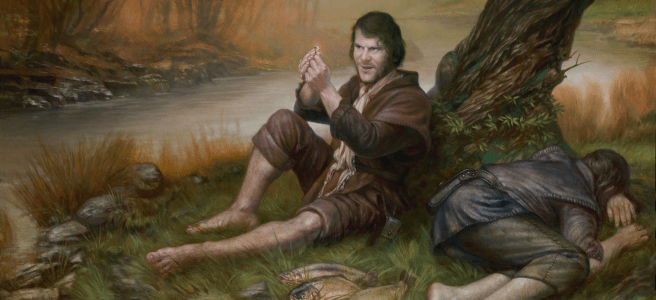
Se fue, empezó a sembrar y de momento apareció ese hombre hecho una furia. Empezó a golpear al pobrecico Francisco en la cabeza con la culata de una escopeta. El tatarabuelo con la mano derecha se intentó resguardar pero no pudo. El criminal lo dejó en el suelo muy malherido y corrió al pueblo gritando enloquecido «He matao al de Castanyeta, he matao al de Castanyeta» (que así llamaban a nuestra familia en el pueblo). Parecía celebrar la desgracia causada sin darse cuenta de que, en el mismo instante del crimen, mató en sí mismo la Gracia y volvió pétreo a su propio corazón….
Decía vuestra abuela Águeda que fueron los mozos de labranza los que encontraron al abuelo allí, en medio del campo, echado en el suelo e inconsciente. La abuela no sabía si los trabajadores lo encontraron por sorpresa al volver a la faena después de comer o si habían ido corriendo al campo alertados por los gritos del asesino. El caso es que lo encontraron y el pobre estaba, más que grave, medio muerto
El asesino por su parte siguió su huida hasta llegar a la casa de una vecina llamada Desideria. Vio las puertas abiertas y, sin que los dueños se dieran cuenta, entró y se escondió en una cueva que la casa tenía. De alguna manera, a las pocas horas, las autoridades lo descubrieron y se lo llevaron preso.
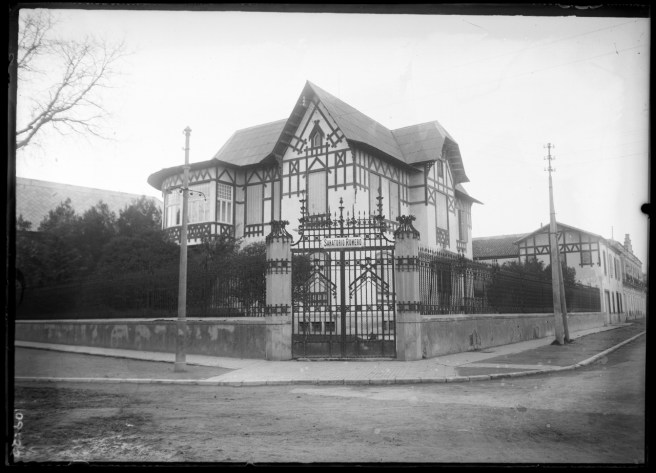
La familia del tatarabuelo y los jornaleros acomodaron al moribundo como mejor pudieron en el coche del tío Julio (la abuela recordaba que era uno de la marca Morris) y lo llevaron a toda velocidad a la capital, al sanatorio del Romero que era en aquellos tiempos el mejor hospital de Albacete. Allí le cortaron el brazo porque lo tenía destrozado por haber intentado protegerse la cabeza con él durante el ataque pero la amputación resultó ser inútil y a los dos días, sin haber siquiera recuperado la consciencia, el pobre tatarabuelo Francisco falleció.
Sabemos que el asesino fue a prisión pero después de él nada más se supo. Tras cumplir su condena no volvió al pueblo. Como el Gollum, quedó desterrado de su terruño así como se exilian del bien y de la paz los que, por sucumbir al poder del Anillo, abandonan el sendero bienaventurado. Pero el mal no tiene un poder absoluto y quién sabe si quizá conoció el arrepentimiento y la auténtica expiación porque a veces (no muy a menudo pero sí a veces): «Donde abundó el pecado sobreabundó la Gracia»…
Por su parte vuestra familia continuó con sus vidas decentes y sencillas. En lo material, el tío Julio, por ser el hermano mayor, se hizo cargo de todo, cuidando de su madre, de sus hermanos y de la heredad y todo lo hizo con mucha diligencia y eficacia pues era un hombre con grandes dotes de organización y un genio para las finanzas por lo que parece que acabó siendo muy rico.
En lo anímico aquella tragedia dejó huella en la familia: el tío Julio toda su vida dijo que desde que murió su padre su vida no había sido vida y vuestro bisabuelo Asensio fue siempre un hombre fuerte y honrado pero el golpe recibido en su infancia imprimió en él un carácter reservado poco dado a alborozos y frivolidades.
Pero las almas de vuestros familiares no quedaron dañadas en lo esencial. No devolvieron mal por mal. Recordarían, imagino, el precepto evangélico «No te dejes vencer por el mal, antes bien vence al mal con el bien». Musitarían con tristeza lo que tantas veces oí en mi infancia: «No sabemos porque el Señor permite lo que permite…». Elevarían oraciones y encargarían Misas por el eterno descanso del alma del padre añorado… como yo espero que hagáis por mí algún día cuando yo ya no esté…
Continuaron, en fin, con sus vidas sencillas, discretas y buenas…
En el cementerio de Villavaliente, en el panteoncico donde pone Serrano García, reposan los miembros de nuestra familia que protagonizaron esta historia… por si algun dia, hijos de mi alma y de mi corazón, tenéis ocasión y queréis acercaros a la tierra donde vuestros ancestros nacieron, vivieron y, a lo último, descansaron.
Os quiere,
Vuestra madre.
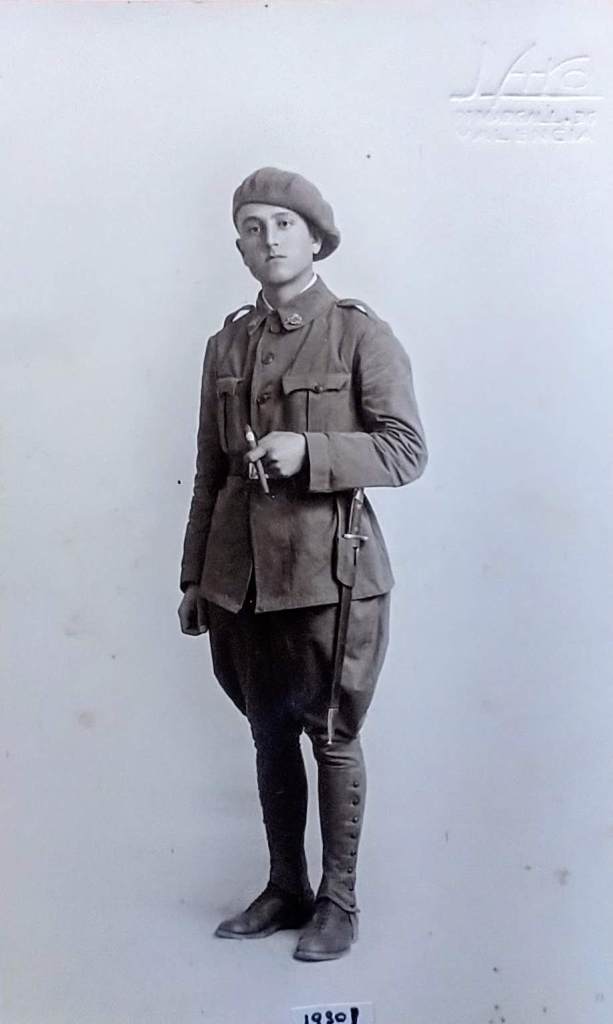
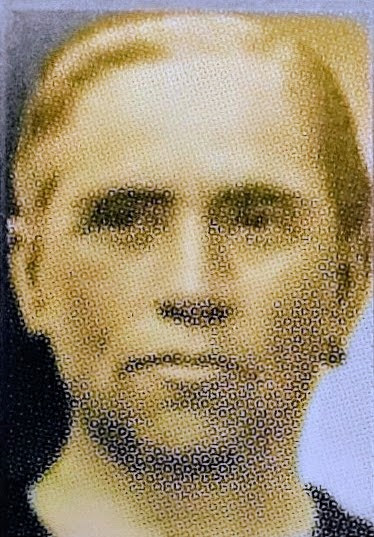
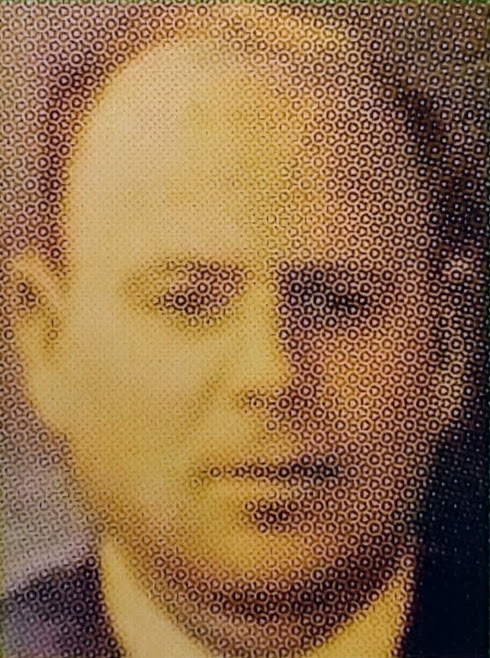
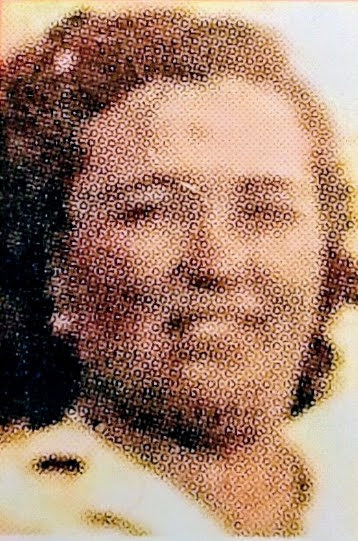
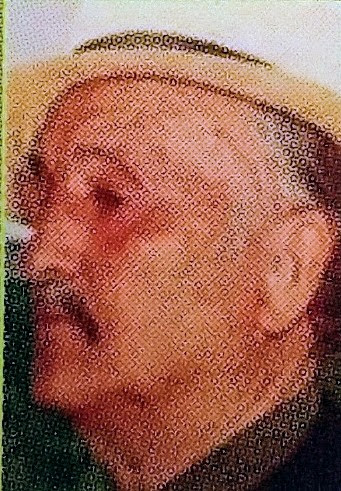
De izquierda a derecha vuestra tatarabuela Josefa y vuestros tíos-bisabuelos Julio, Lola y Paco/From left to right: your great-great-grandmother Josefa and your great-great-uncles Julio, Lola and Paco.
……………………………………………………………………………………………………………………………………………………………………………………..
Gollum or Fallen Nature. A Family Story.
My dear children,
You say that in my previous letter there echoed of a longed-for and lost time; of a pre-technological world (very similar to our beloved Shire) where reasonably good men, with adequate self-control, lived according to a natural order they knew through intuition, tradition, reasoning, or Revelation. Men who, in that small world, led mostly upright and honorable lives.
But we know that it is unwise to idealize, since all of us, men and hobbits alike, have a weakened nature, bear a wound, and carry a Ring. Thus, our life is a constant spiritual battle from which we do not always emerge victorious. And so, even in the wonderful Shire, petty meanness arose, and our dear Bilbo and Frodo knew, from having suffered it, of envy, theft, and various other despicable acts.
But beyond these petty miseries, sometimes Evil, with a capital E, erupts with overwhelming force. In those villages of La Manchuela, during the 150 years our family has preserved, evil reigned supreme on several occasions. Terrible shadows emerged and seemed to engulf everything…at least for a time. One of these misfortunes particularly wounded our family when a neighbor, a Smeagol like any other, momentarily possessed by dark powers, transformed into Gollum and committed a terrible crime, unleashing much evil upon his neighbors and himself. Let me tell you about it…
The unwitting protagonist of this event was your great-great-grandfather Francisco, of whom no image has reached us.. He was born in 1865 and married his first cousin, Josefa Serrano Díaz, around 1894. She was from Higueruela and 12 years younger than him. They lived in Villavaliente, where your great-great-grandfather was from. The couple had several children, four of whom reached adulthood: The eldest was Juan Pascual Julio (Uncle Julio), born on July 25, 1896. In 1905, Dolores (Aunt Lola) was born. On July 26, 1908, your great-grandfather Anatolio Asensio (Grandfather Asensio, Grandmother Águeda’s father) was born, and finally, in April 1914, the youngest member of the family arrived: Uncle Paco.
As your Grandmother Águeda explained, this happened around 1920 when your great-great-grandfather Francisco was 55 years old, Uncle Julio was 24, and your great-grandfather Asensio was still a young boy. It was planting season, that is, the month of October. Apparently, our family owned a farm at that time (which later ceased to belong to the family) that had been cultivated on a lease by a tenant farmer. At one point, our family wanted to start plowing the field themselves again, a decision that greatly angered the tenant farmer. It seems that, seeing the dispute was serious, it was decided that until a solution was found, no one would work the land. But we don’t know why, one morning Uncle Julio (who ruled the house more than his own father because of his great leadership skills and abundant charm) ordered the farmhands to start cultivating the farm immediately, without consulting anyone.
That same morning, the tenant farmer saw the farmhands hard at work and asked them, «Who ordered you to plow?» One of them replied, «The master,» referring to Uncle Julio, but the other understood that he was talking about the father, that is, your great-great-grandfather Francisco. The settler, whose name has been lost to us, left without another word.
Later that day, while the young men were eating at our family’s house (as was customary in those days), Grandfather Francisco said to his family, «While the young men are eating, I’ll go and sow the seeds, and that way, when they arrive at the fields with the mules, they’ll only have to cover what’s already been sown with soil.»
He left, started planting, and suddenly that man appeared, a raging man. He began to beat poor Francisco on the head with the butt of a shotgun. Great-great-grandfather tried to shield himself with his right hand, but he couldn’t. The criminal left him lying badly wounded on the ground and ran to the village shouting madly, «I’ve killed the man from Castanyeta, I’ve killed the man from Castanyeta!» (that’s what they called our family in the village). He seemed to be celebrating the misfortune he had caused, unaware that, in the very instant of the crime, he had killed Grace within himself and turned his own heart to stone.
Your grandmother Águeda said that it was the farmhands who found Grandfather there, in the middle of the field, lying unconscious on the ground. Grandmother didn’t know if the workers had found him by surprise when they returned to work after lunch or if they had run to the field alerted by the killer’s shouts. The fact is, they found him, and the poor man was more than just seriously injured—he was half-dead.
The murderer, meanwhile, continued his escape until he reached the house of a neighbor named Desideria. He saw the doors were open and, without the owners noticing, he went inside and hid in a cave in the house. Somehow, a few hours later, the authorities discovered him and arrested him.
The great-great-grandfather’s family and the farmhands squeezed the dying man into Uncle Julio’s car as best they could (Grandma remembered it was a Morris) and sped to the capital, to the Romero sanatorium, which was the best hospital in Albacete at the time. There, they amputated his arm because it was mangled from trying to protect his head with it during the attack, but the amputation proved useless, and two days later, without even regaining consciousness, poor great-great-grandfather Francisco died.
We know the murderer went to prison, but nothing more was heard of him after that. After serving his sentence, he never returned to the village. Like Gollum, he was banished from his homeland, just as those who succumb to the power of the Ring and abandon the blessed path are exiled from goodness and peace. But evil does not have absolute power, and who knows if perhaps he experienced repentance and true atonement, because sometimes (not very often, but sometimes): «Where sin abounded, grace abounded all the more»…
Meanwhile, your family continued with their decent and simple lives. In material matters, Uncle Julio, being the eldest brother, took charge of everything, caring for his mother, his siblings, and the estate. He did all this with great diligence and efficiency, for he was a man with great organizational skills and a genius for finance, so it seems he ended up very wealthy.
That tragedy left its mark on the family emotionally: Uncle Julio said all his life that since his father’s death, his life hadn’t truly been a life, and your great-grandfather Asensio was always a strong and honorable man, but the blow he suffered in his childhood instilled in him a reserved character, not given to merriment or frivolity.
But the souls of your relatives were not fundamentally damaged. They didn’t repay evil with evil. I imagine they remembered the Gospel precept, «Do not be overcome by evil, but overcome evil with good.» They murmured sadly what I so often heard in my childhood: «We don’t know why the Lord allows what He allows…» They would offer prayers and have Masses said for the eternal rest of their beloved father’s soul… as I hope you will do for me someday when I am no longer here…
And so they continued with their simple, discreet, and good lives…
In the Villavaliente cemetery, in the mausoleum marked Serrano García, rest the members of our family who were part of this story… in case someday, my dear children, you have the opportunity and wish to visit the land where your ancestors were born, lived, and finally, rested.
Love,
Your mother.

 Cartas a mis hijos